If you have ever stood sideways in the mirror, smoothed your hands over your lower tummy, and wondered why that little pooch refuses to budge no matter how many crunches you do, please take a breath. You are so far from alone, and you are not doing anything wrong. Pilates for lower belly pooch is one of the gentlest, most effective ways to soften that stubborn area, and it has almost nothing to do with crunching.
Here is the part most workout videos will never tell you. The lower belly pooch is rarely about a lack of effort, and crunches often make it look worse, not better. The real answer lives in a deep, quiet muscle that wraps around your middle like a corset.
In this guide we will gently unpack what your lower belly pooch actually is, why deep-core tension beats endless crunches, and six soft Pilates moves that target the lower abs the kind way. No straining, no punishing ab burns, just slow and intentional movement that works.
What Is a Lower Belly Pooch, Really?
Before we move a single muscle, let us clear up the confusion that keeps so many women stuck in a frustrating cycle of crunches that never quite deliver.
It Is Not Always About Fat
A lower belly pooch can come from several gentle sources, and stored fat is only one of them. Very often the pooch is a combination of a weak deep core, a forward tilt in the pelvis, bloating, and posture that lets everything in your midsection drift forward.
This matters because it changes everything about how you approach it. If your pooch is partly a posture and core-tension issue, then no amount of fat-focused effort will fix the real cause. You need to retrain the muscle that holds your lower belly in.
Why Crunches Make It Worse
Crunches target the rectus abdominis, the surface six-pack muscle that runs down the front of your stomach. Training only this muscle can pull your ribcage down and your pelvis forward, which can actually push your lower belly outward over time.
Crunches also do nothing for the deep stabilizing muscle underneath. So you can do hundreds of them, feel the burn, and still see the same soft pooch staring back at you. The effort is real. It is just pointed at the wrong muscle.
Why Deep Core Tension Beats Crunches
This is where Pilates quietly outshines almost every other approach to the lower belly. Instead of crunching the surface, it teaches you to draw in and hold from the inside out.
Meet Your Transverse Abdominis
Your transverse abdominis, often called the TVA, is the deepest abdominal muscle. It wraps horizontally around your waist like a natural corset, and its whole job is to compress and support your midsection.
When this muscle is strong and switched on, it gently flattens your lower belly and pulls everything in. When it is weak and asleep, your lower tummy has nothing holding it back, and the pooch becomes far more visible. Waking up the TVA is the real secret to a flatter, more supported lower belly.
Crunches Train the Wrong Muscle
Pilates is built around deep-core engagement rather than surface crunching. Every movement asks you to draw your navel gently toward your spine and hold that soft tension while you move, which is exactly how you train the TVA.
This is the entire foundation of our 28-Day Flat Tummy Reset, a program that leans on breath-led, deep-core tension instead of exhausting crunch challenges. It calms your nervous system and sculpts your lower belly at the same time, which is the gentle magic of Pilates.
6 Gentle Pilates Moves for the Lower Belly
These six movements all train the deep core and lower abs without a single crunch. Move slowly, breathe fully, and keep your lower back gently supported. Quality and control matter far more than speed or reps. Aim for eight to ten slow repetitions of each.
1. Diaphragmatic Breathing with TVA Connection
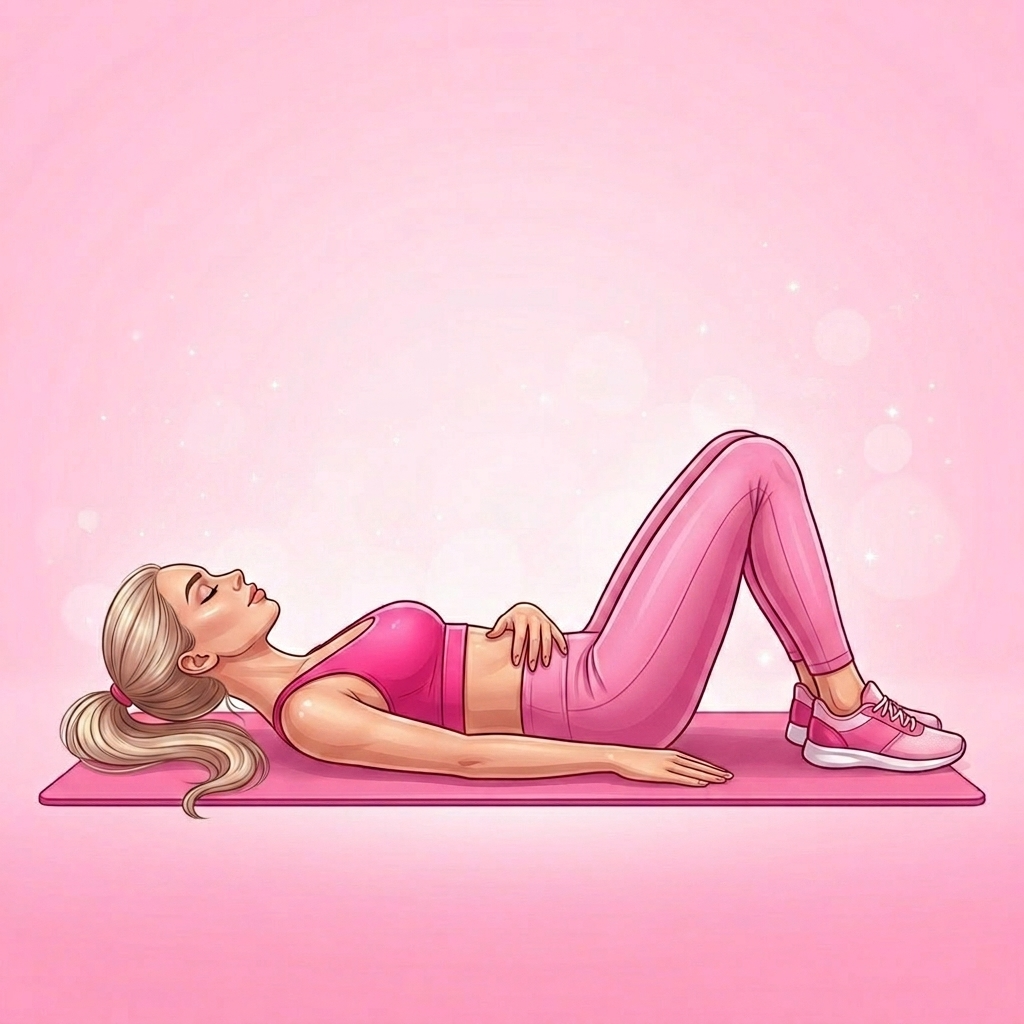
Start here every time. Lie on your back with knees bent and rest your hands on your lower belly. Breathe in to fill your ribs, then as you exhale, gently draw your navel down toward your spine, as if zipping up a low, snug pair of jeans.
This is how you find and switch on your transverse abdominis. Spend one to two minutes here. It looks like almost nothing, yet it is the most important move on this list.
2. Pelvic Tilts
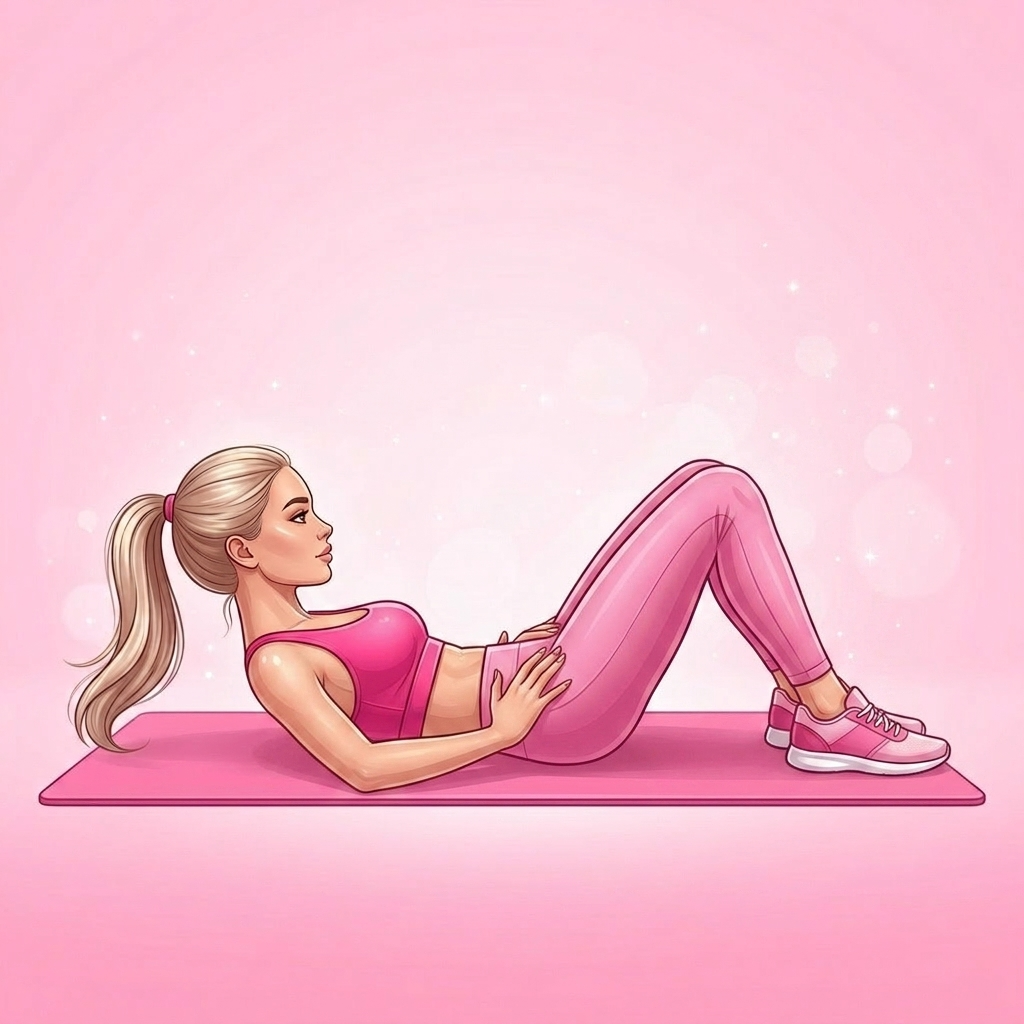
Stay on your back with knees bent and feet flat. On an exhale, gently tilt your pelvis so your lower back presses lightly into the floor, drawing your lower belly in as you go. Release slowly and repeat.
Pelvic tilts teach your pelvis to stop tipping forward, which is one of the biggest hidden causes of a lower belly pooch. They also engage the deep core without any strain on your neck or back.
3. Dead Bug
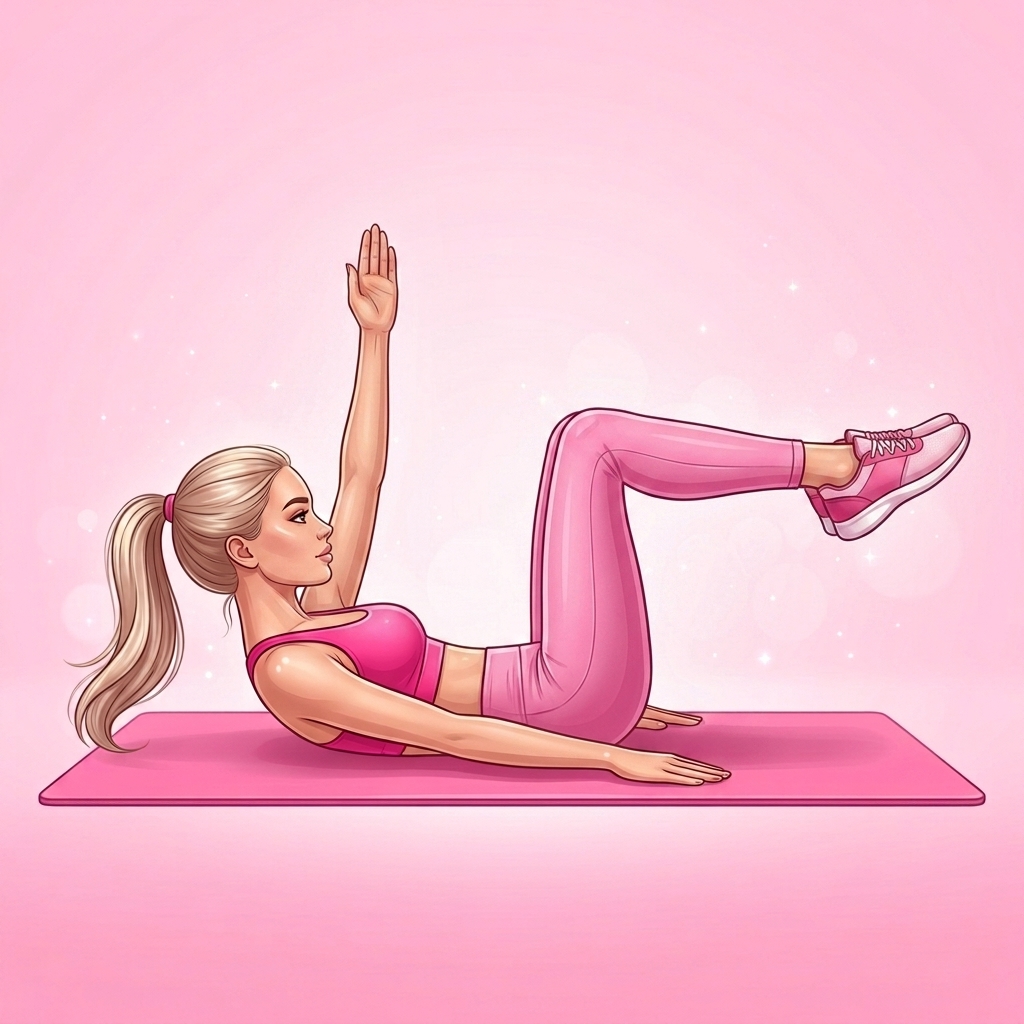
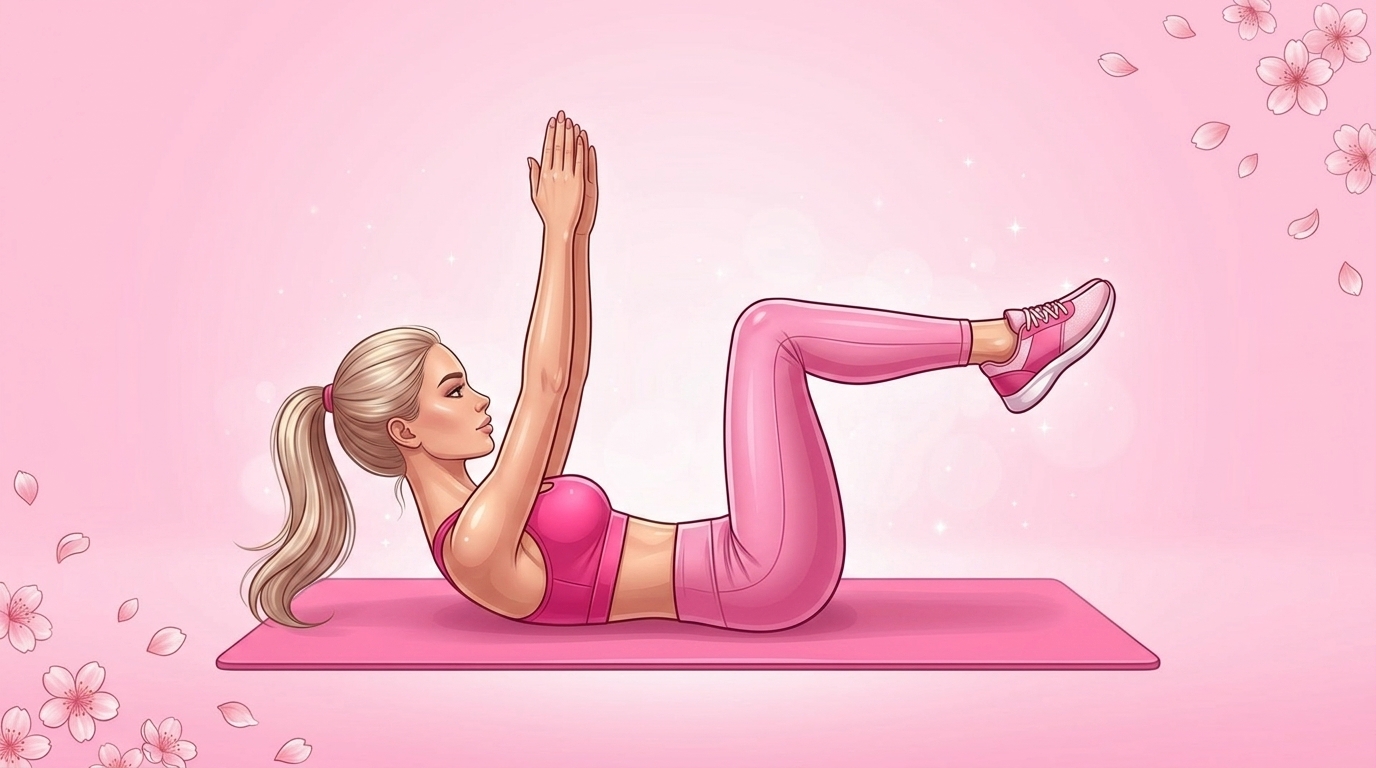
Lie on your back with your arms reaching to the ceiling and your knees bent at a right angle, shins parallel to the floor. Keeping your lower belly drawn in, slowly lower one arm overhead and the opposite leg toward the floor, then return and switch sides.
The dead bug is a lower-ab powerhouse because it challenges your deep core to keep your spine still while your limbs move. Keep the movement small if your lower back lifts at all.
4. Toe Taps
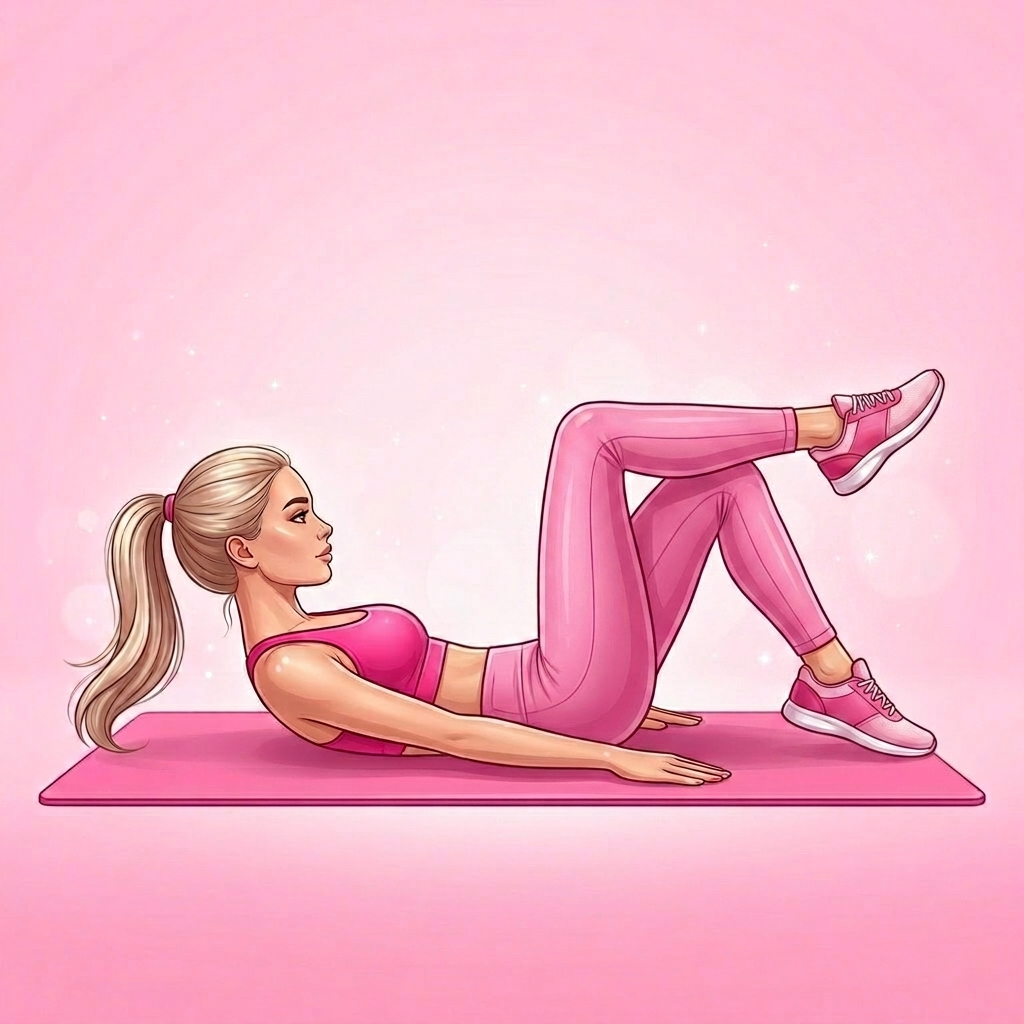
From the same starting position with knees bent at a right angle, exhale and slowly lower one toe to tap the floor, keeping your lower belly drawn in and your back stable. Inhale to lift it back, then switch sides.
Toe taps gently target the lower abdominals, the exact area where the pooch sits. Because the movement is slow and controlled, you build deep strength without ever crunching your neck forward.
5. Single Leg Stretch
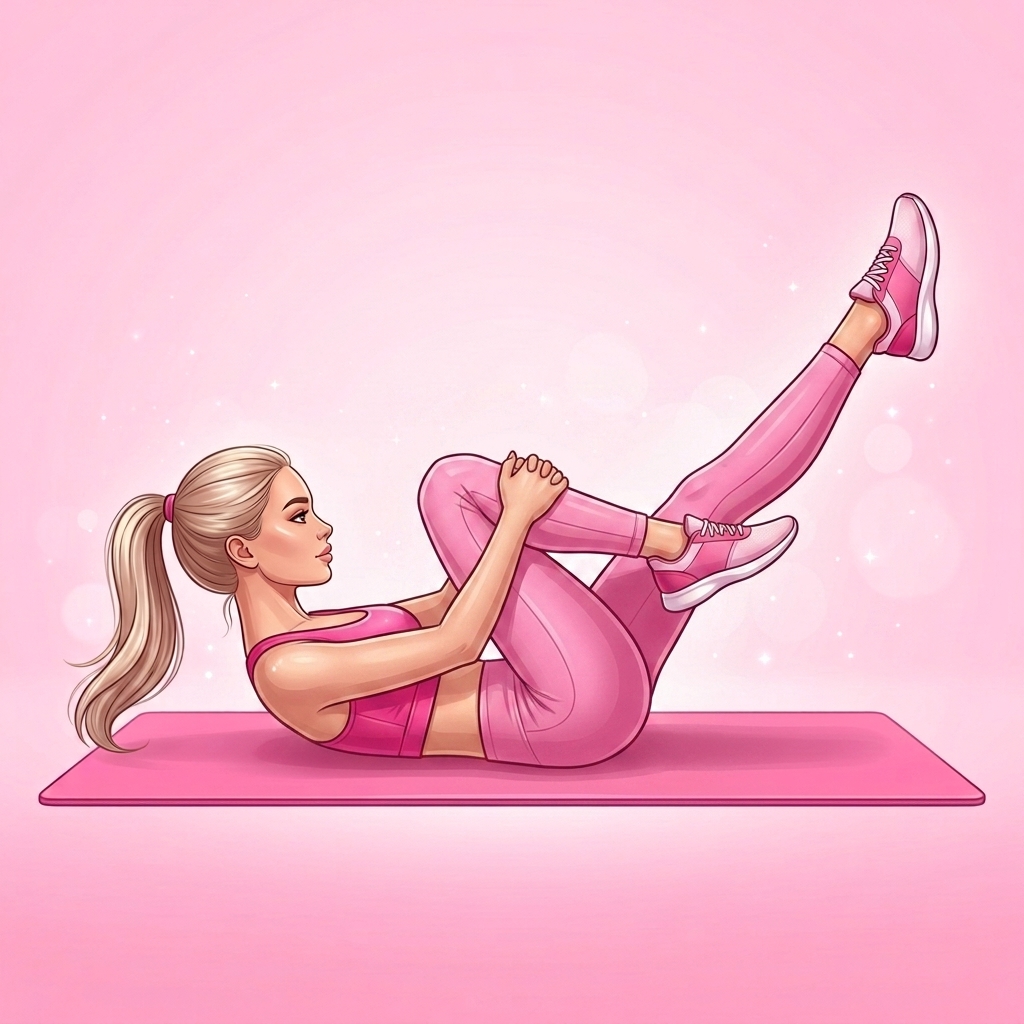
Lie on your back, draw both knees in, and rest your hands lightly on one knee. Extend the opposite leg out at a comfortable height while keeping your lower belly scooped in, then switch legs in a slow, flowing rhythm.
This classic Pilates move builds deep-core control and coordination. Keep your extended leg high enough that your lower back stays gently grounded, and let your breath guide the pace.
6. Double Leg Lower and Lift
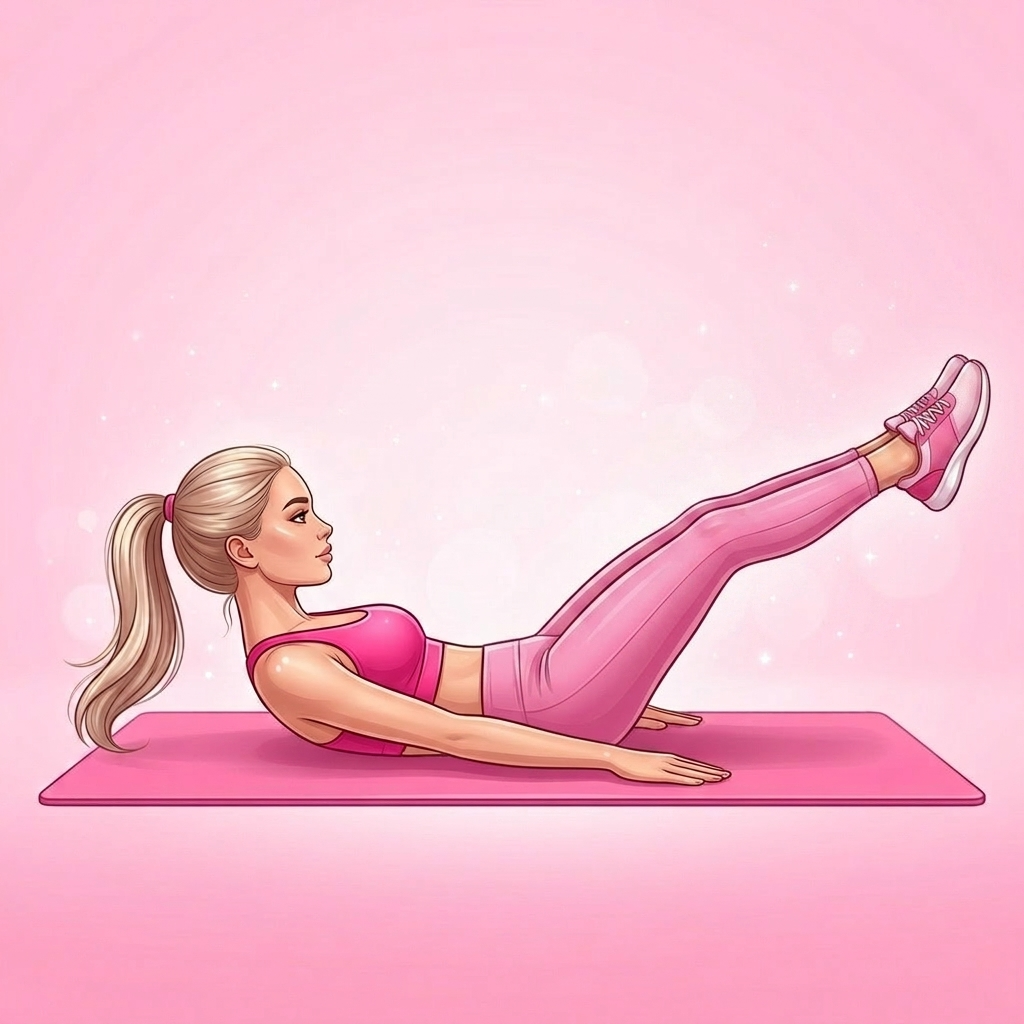
This one is more advanced, so move into it only when the others feel steady. Lie on your back with both legs extended toward the ceiling. Keeping your lower belly firmly drawn in, slowly lower both legs only as far as you can control, then lift them back up.
If your lower back arches at any point, raise your legs higher or bend your knees. Done with control, this is one of the most effective deep-core moves for the lower belly.
How to Make Your Lower Belly Work Stick
A flatter lower belly comes from consistency and posture, not from punishing yourself. Gentle daily practice will always beat an intense session you dread and skip.
Pay attention to how you stand and sit through the day, because a pelvis that constantly tips forward will keep pushing your lower belly out. Tight hip flexors from long hours of sitting are often part of this picture, which is also why they can quietly contribute to lower back tension. Our guide to gentle Pilates for lower back pain walks through the same posture connection from another angle.
Pair your deep-core moves with calm, mindful breathing and steady hydration, and try a short walk most days. None of this is about restriction. It is about helping your body feel supported, aligned, and held from the inside.
If keeping it consistent feels like the hard part, a gentle structure can carry you. The 28-Day Flat Tummy Reset sequences this exact deep-core work into a soft daily rhythm, so you never have to wonder what to do next.
What Realistic Results Look Like
Let us set kind, honest expectations. Because so much of the lower belly pooch is about deep-core tension and posture, many women notice their tummy feeling firmer and more supported within the first two weeks of consistent practice.
Visible changes in tone usually unfold over four to eight weeks of gentle, regular work. The lower belly is genuinely one of the most patient areas of the body, so soft consistency is everything here. If part of your pooch is bloating, you may feel a difference even sooner, and our guide to easing belly bloat with gentle Pilates pairs beautifully with this routine.
For the bigger picture on what deep-core Pilates can truly do for your midsection, our honest look at whether Pilates gives you a flat stomach builds on this exact same foundation of tension over crunches.
Frequently Asked Questions
Can Pilates get rid of a lower belly pooch?
Pilates can significantly reduce a lower belly pooch by strengthening the transverse abdominis, the deep muscle that flattens and supports your midsection, and by correcting the forward pelvic tilt that pushes the lower belly out. It works best with consistent practice and mindful posture over four to eight weeks.
Why do crunches not get rid of my lower belly pooch?
Crunches train the surface rectus abdominis, not the deep transverse abdominis that actually holds your lower belly in. Over time, crunch-only routines can even tilt your pelvis forward and push the pooch outward. Deep-core Pilates targets the right muscle, which is why it works when crunches fail.
What is the best Pilates exercise for the lower belly?
Diaphragmatic breathing with a gentle transverse abdominis draw-in is the most important foundation, because it wakes up the deep core. Pelvic tilts, dead bugs, and toe taps are also wonderfully effective lower-belly moves because they build deep tension without crunching your neck or straining your back.
How long does it take to flatten the lower belly with Pilates?
Many women feel their lower belly become firmer and more supported within two weeks of consistent deep-core Pilates. Visible toning typically unfolds over four to eight weeks. The lower belly is a patient area, so gentle daily consistency matters far more than intensity.
Your Next Step
So why does core tension beat crunches for the lower belly pooch? Because the pooch is held in place by a deep, quiet muscle that crunches never reach. When you learn to draw in and engage from the inside, you support your lower belly the way it was always meant to be supported.
If you would love a soft, done-for-you plan that weaves this deep-core tension work into a gentle daily rhythm, the 28-Day Flat Tummy Reset is the kindest place to begin. Four weeks of feminine, breath-first movement designed to flatten and support from the inside out, with not a single punishing crunch in sight.
You do not need to be perfect. You just need to begin.