
If you have been told to eat 100 grams of protein a day by one influencer and 60 grams by another, this calculator gives you the honest middle ground. The pilates protein question is one of the most contradicted in women’s wellness, with the bro-fitness crowd pushing 200 grams and the diet-culture crowd whispering 40. Both are wrong for most pilates princesses. Our free Pilates Protein Calculator uses evidence-based g/kg multipliers calibrated for your weight, your activity level, and your goal. The basic result is yours immediately. No email required. No supplement upsell.
Pilates Protein Calculator
Enter your weight, your activity level, and your goal. The basic result is yours, free, the moment you hit calculate.
Your daily protein target is approximately
0 grams
per day
Per meal breakdown
Aim for about 0 grams at each of 4 main protein touchpoints (breakfast, lunch, snack, dinner).
What this looks like in real food
Sample day showing your target.
Most pilates princesses under-eat protein, not over-eat. The number above is enough, not aggressive. Hit it consistently and you protect lean tissue, satiety, and hair-skin-nails health without grinding.
Want a Personalized Protein Meal Plan?
We will send you a custom 7-day breakdown showing exactly how to hit your protein target each day, with pilates-friendly recipes and a grocery list calibrated to the number above. Free, no spam, easy unsubscribe.
How the Pilates Protein Calculator Works
The calculator uses grams of protein per kilogram of body weight, the standard exercise nutrition formula. Your weight in kilograms gets multiplied by a g/kg number that varies by activity level and goal. Sedentary maintenance is 0.8 g/kg. Moderate activity with fat loss is 1.4 g/kg. Very active with build is 1.8 g/kg. The full matrix lives in the section below this one.
Why activity matters: pilates demands more protein than sitting, but less than serious resistance training. Three to four sessions a week of moderate pilates plus daily walking lands you in the moderate activity row, around 1.2 to 1.4 g/kg depending on your goal. Fat loss adds protein because you want to preserve lean tissue while in a calorie deficit. Build lean tissue adds protein because you are signaling growth. Maintenance keeps protein steady because nothing needs ramping up.
Most pilates princesses under-eat protein, not over-eat. The most common pattern is a Greek yogurt at breakfast, a salad at lunch, and dinner that scales with whatever the family is having. That maps to maybe 50 to 60 grams a day. For a 150 lb woman doing moderate pilates with fat loss intentions, the calculator says 95 grams. That gap is exactly why progress stalls, hair gets thin, and afternoon hunger spikes. The fix is not exotic. It is just adequate.
Daily Protein Targets by Activity and Goal
Here is the full 4-by-3 matrix the calculator uses. Find your activity row and your goal column. The number is grams of protein per kilogram of body weight per day. Multiply by your weight in kilograms (or divide your weight in pounds by 2.2 first) to get your daily target.
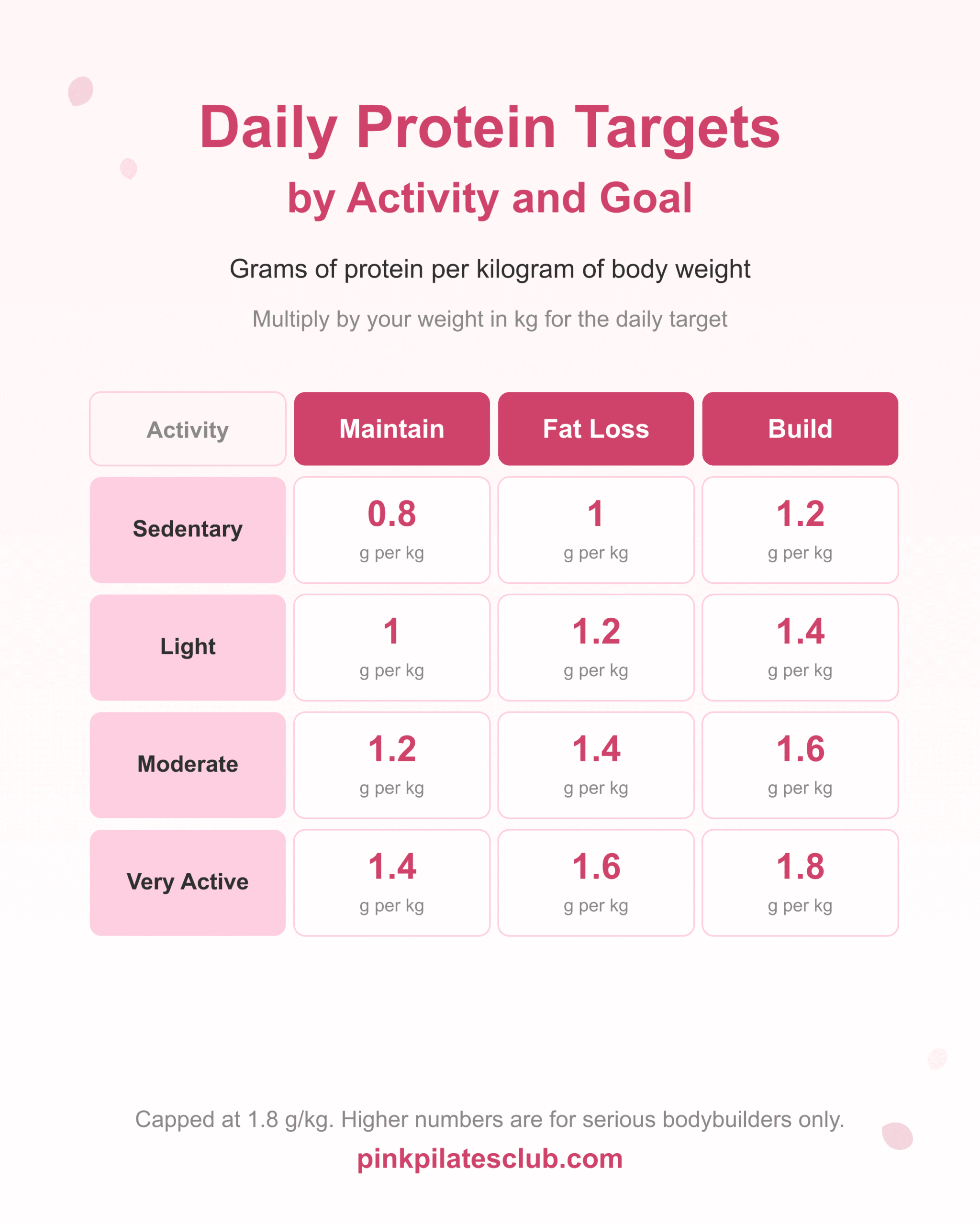
Notice that even the highest cell (very active, build) caps at 1.8 g/kg. Most published recommendations top out around 1.6 to 2.0 g/kg for women not actively bodybuilding. We capped at 1.8 because going higher dilutes calories from carbs and fats without delivering meaningful additional benefit for pilates princesses. If you are actively powerlifting, your numbers are higher. If you are doing pilates, the numbers above are honest.
Why Pilates Princesses Need Adequate Protein
Most fitness content sells protein with a body-fat-percentage hook: hit 1.6 g/kg or stay soft. The case for protein in pilates is bigger and softer than that. It runs through four overlapping reasons.
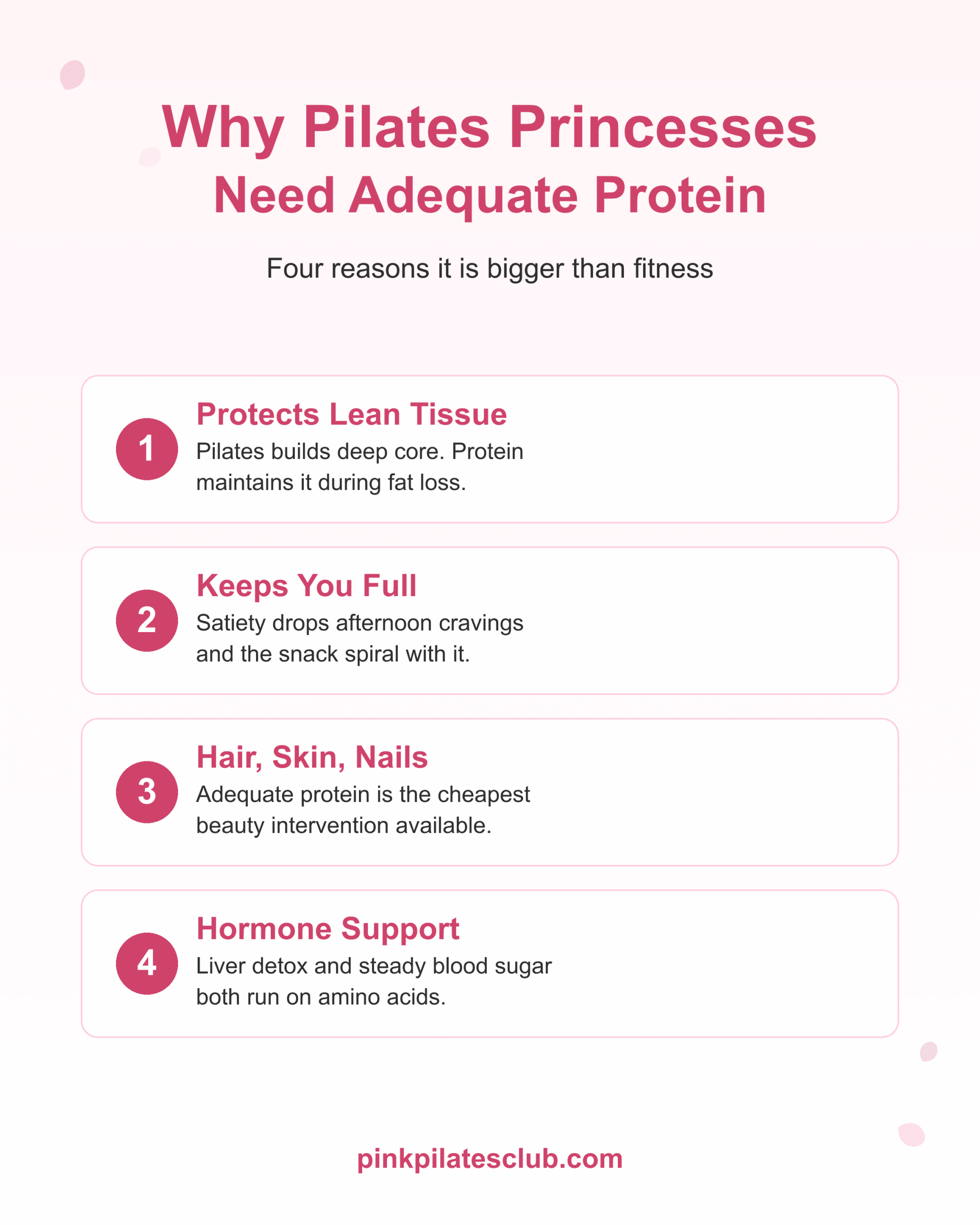
First, protein protects lean tissue. Pilates builds the deep core and the small stabilizers that flatten your stomach and lengthen your line. That tissue needs amino acids to maintain itself, especially during fat loss or hormonal shifts. Under-eating protein during a deficit is the fastest way to lose the lean tissue you just built and end up smaller but softer. Second, protein keeps you full. Satiety is the hidden weight loss lever. Hitting 95 grams across the day lands you in the satiety zone where afternoon snack cravings drop off naturally.
Third, protein supports hair, skin, and nails. The thinning hair, brittle nails, and dull skin a lot of women in their thirties and forties struggle with often trace back to chronically low protein paired with chronic stress. Adequate protein plus adequate sleep is the cheapest beauty intervention available. Fourth, protein supports hormone balance. Liver-driven estrogen detox and steady blood sugar both need amino acids to run correctly. Under-eating protein worsens both, which feeds back into PMS, fatigue, and the energy roller coaster.
The number the calculator gave you is enough, not aggressive. It is the floor that lets pilates do its job. Hit it consistently for four to eight weeks and most pilates princesses notice the changes everywhere except the scale.
What Your Daily Protein Looks Like in Real Food
Numbers without food are abstract. Below is what a 95-gram day actually looks like for a moderately active 150 lb woman in fat loss. Heavier or lighter targets scale the portion sizes up or down. Visitors looking for full recipes find them in our recipe products.
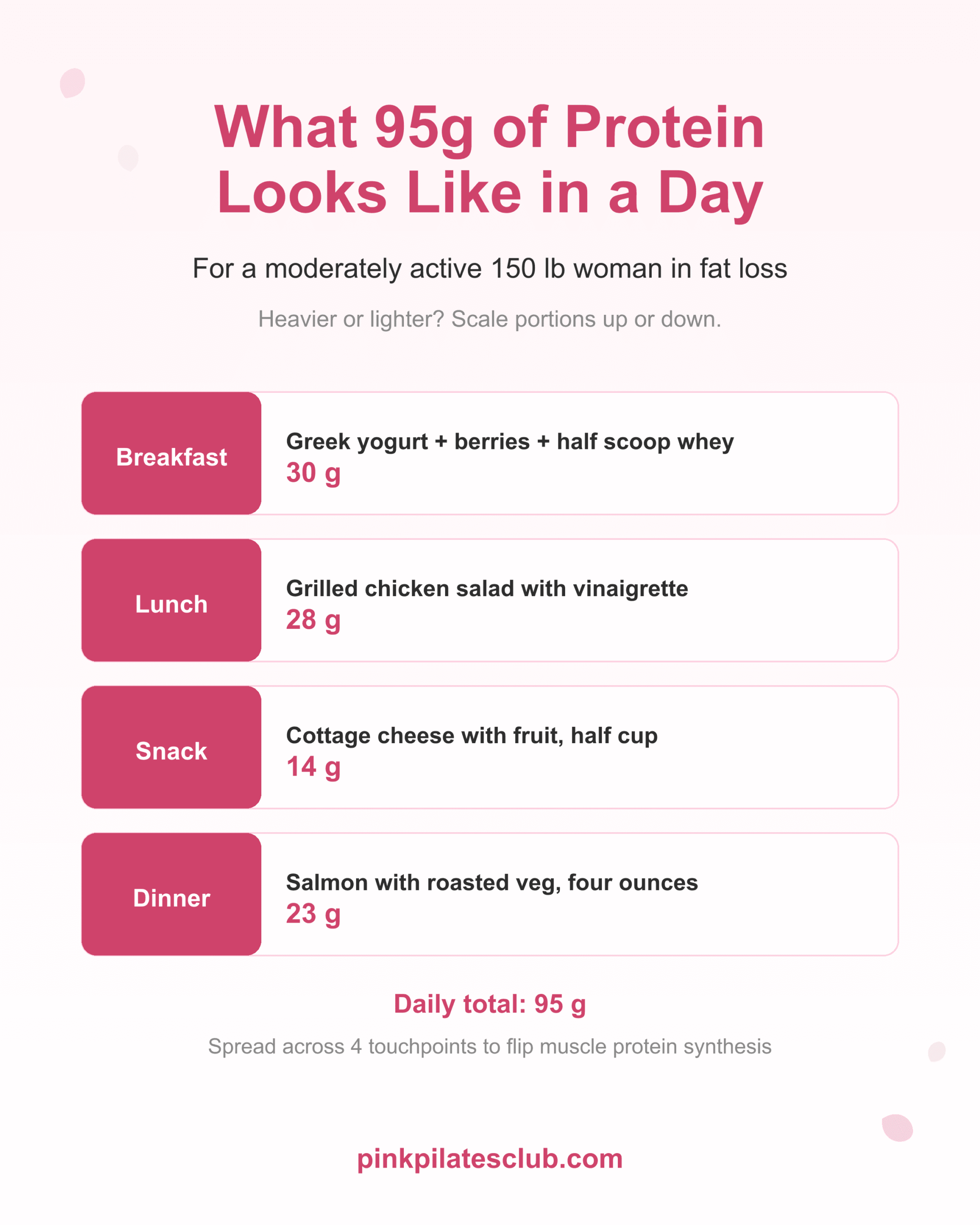
Breakfast lands around 30 grams. Greek yogurt, half a scoop of whey, berries, or a savoury option like two eggs plus cottage cheese. Lunch lands around 28 grams. Grilled chicken salad with vinaigrette, or a tuna bowl, or salmon with greens. Snack lands around 14 grams. Cottage cheese with fruit, a hard boiled egg plus a string cheese, or a small protein smoothie. Dinner lands around 23 grams or whatever closes the gap to your target. Salmon, white fish, lean beef, or a tofu-and-tempeh stir fry depending on your preferences.
Touchpoint counts matter. Spreading protein across 4 meals beats hitting the same total in 2 large meals because muscle protein synthesis works on a per-meal threshold of around 25 to 30 grams. Smaller meals below that threshold do not flip the synthesis switch as efficiently. The 4-touchpoint pattern is exactly why the calculator above shows your per-meal target as a separate number.
Hit Your Protein Target Without Cooking Forever
Pretty and Protein-Packed bundles 30 high-protein recipes designed for pilates princesses: each one hits 25 grams or more, takes under 30 minutes, and tastes nothing like fitness food. The exact toolkit for hitting the target you just calculated, every day, without burning out on chicken breast.
$24.97 · instant digital access
Frequently Asked Questions
How much protein should a pilates woman eat per day?
For a 150 lb moderately active woman, daily protein lands around 80 to 110 grams depending on goal. Maintenance is roughly 80 grams, fat loss roughly 95 grams, building lean tissue roughly 110 grams. Use the calculator above for your exact weight and activity level.
Do you need extra protein if you only do pilates?
Yes, slightly more than sedentary baseline. Pilates engages deep core and stabilizer muscles continuously across a session, which means more amino acid demand than sitting still. Light pilates lands at 1.0 g/kg for maintenance. Moderate at 1.2 g/kg. Both are above the sedentary 0.8 g/kg.
Can you lose weight with pilates without high protein?
You can lose scale weight, but you will lose lean tissue along with fat, which sabotages the body composition results pilates is best at. Adequate protein during a deficit is what protects the deep core and stabilizers you are building. Skip protein and the same calorie deficit produces a softer body.
What is the best protein source for pilates princesses?
Greek yogurt, eggs, cottage cheese, chicken, fish, and a clean whey or plant protein for the day’s gap. The best protein source is the one you actually eat consistently. Variety prevents food fatigue. Aiming for 25 to 30 grams per touchpoint across 4 meals is more important than which protein source you pick.
Is 100 grams of protein enough for a 150 lb woman?
For most pilates princesses, yes. A 150 lb woman doing moderate pilates with maintenance or fat loss goals lands at 80 to 95 grams. 100 grams covers fat loss with light cushion. Building lean tissue at very active level pushes the target slightly higher to about 110 grams.
Why is protein important for women in their thirties and forties?
Lean tissue declines roughly 1 percent per year after thirty without intervention. Adequate protein plus pilates plus walking is the simplest stack to slow that decline. Protein also supports the hair, skin, nail, and hormone systems that often weaken in this decade. The intervention is gentle, not heroic.
Your Next Step
You now have a real number for your daily protein target, plus the context that explains why most pilates princesses fall short. If you want a personalized 7-day breakdown showing exactly how to hit it with pilates-friendly recipes, take the email plan offered above. If you are ready for the full toolkit of high-protein recipes designed for pilates princesses, Pretty and Protein-Packed is the next step. You do not need to be perfect. You just need to be adequate.
Keep Reading
- the Pilates Calorie Burn Calculator if you want the calorie side of the equation
- the Wall Pilates Calorie Burn Calculator for wall-specific routines
- our Pilates Weight Loss Calculator for a 12-week timeline view
- the Pilates vs Yoga Calorie Comparison if you do both practices
- the Hormone Balance Quiz, since under-eating protein worsens cortisol and estrogen patterns
- the Posture Assessment Quiz to check the structural side of your results
- real mat pilates results stories from pilates princesses
- what to check when pilates feels like it is not working yet
- the consistency tips that turn good intentions into real change