You have been told your whole life that harder is better. That more sweat means more results. That if your workout does not leave you breathless and sore, it was not enough. And then you found pilates, and a quiet question formed: is gentle pilates vs HIIT even a fair comparison? Can something this soft actually deliver real results?
Here is the answer that might surprise you: for a significant number of women, especially those carrying chronic stress, gentle pilates does not just match intense workouts. It outperforms them. Not because pilates is magic, but because of how your nervous system, hormones, and biology actually work under stress.
This is the science behind our “Trade Burnout for Bloom” philosophy. And once you understand it, you will never feel guilty about choosing gentle movement again.
The Cortisol Problem: Why Intense Workouts Can Backfire
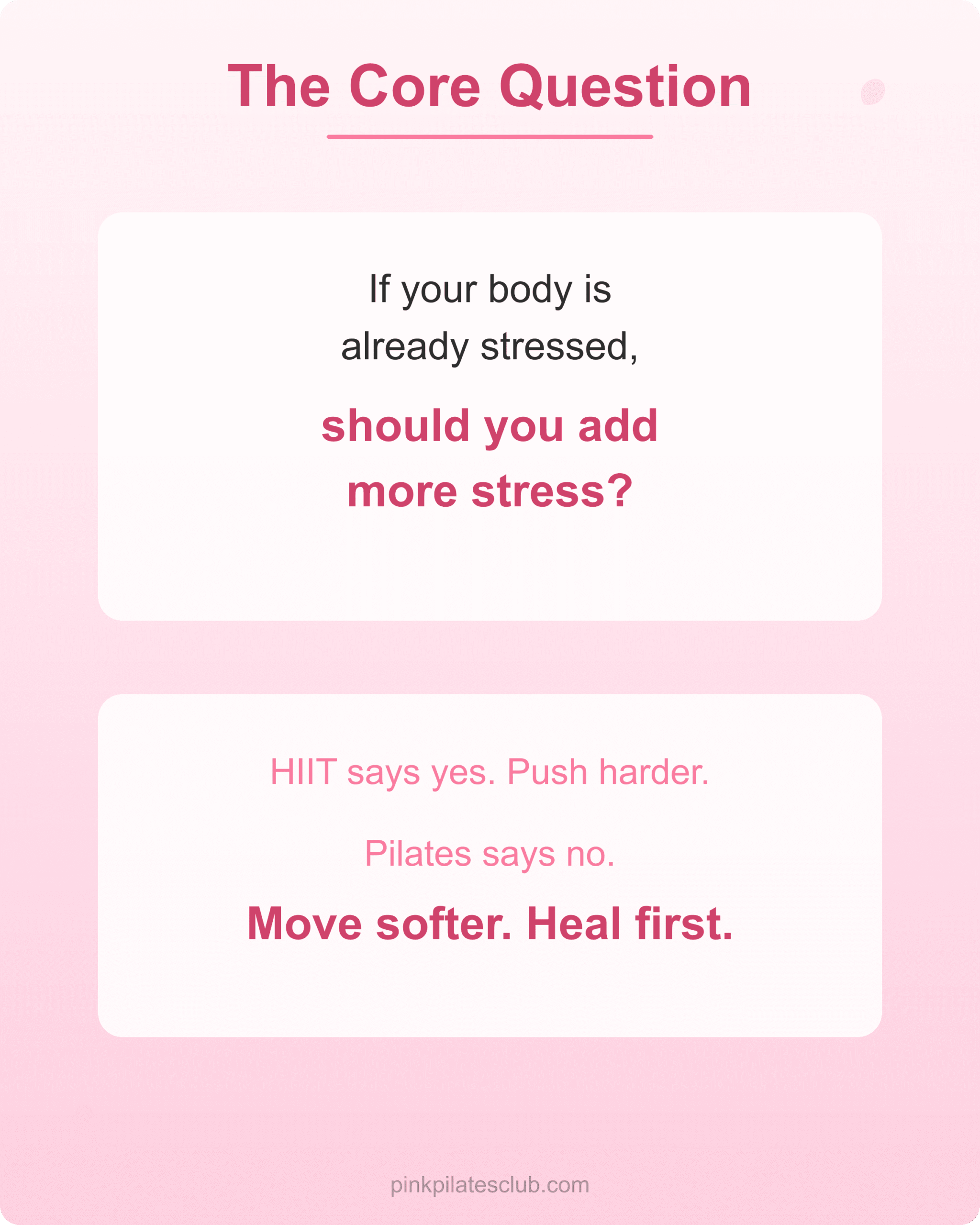
To understand why gentle pilates vs HIIT matters, you need to understand one hormone: cortisol.
Cortisol is your stress hormone. When your body perceives a threat, whether that is a deadline, an argument, poor sleep, or financial worry, your adrenal glands release cortisol. In small, temporary doses, cortisol is useful. It sharpens focus and mobilises energy. But chronic stress keeps cortisol permanently elevated, and that changes everything about how your body responds to exercise.
What Elevated Cortisol Does to Your Body
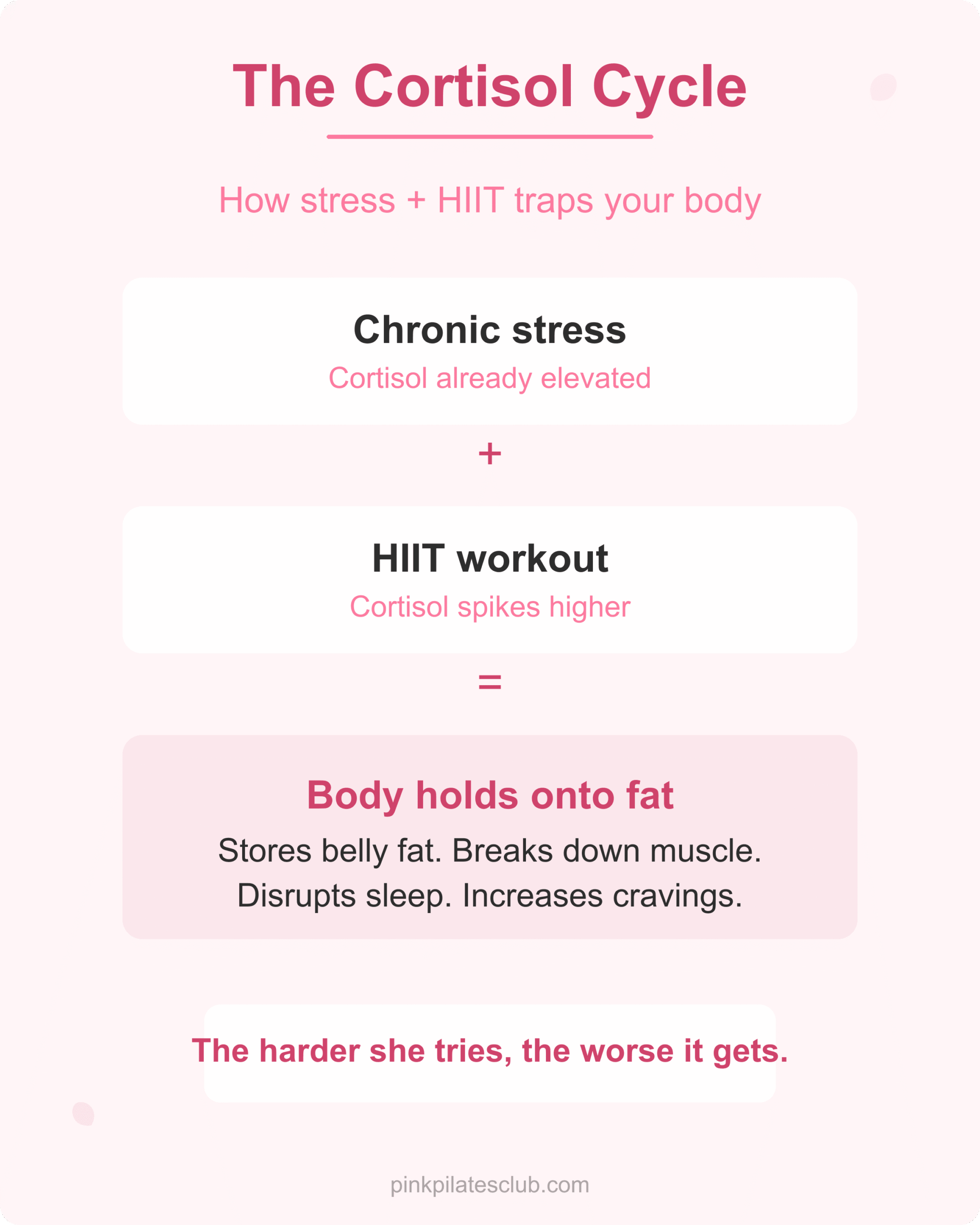
When cortisol stays high for weeks or months, your body enters a survival state. It begins storing fat, particularly around your midsection, as an emergency energy reserve. It breaks down muscle tissue for quick fuel. It disrupts sleep, increases appetite for sugar and carbohydrates, and suppresses your immune system.
This is not a theory. It is well-documented endocrinology. Research published in the journal Obesity found that women with higher cortisol levels stored significantly more abdominal fat, regardless of their diet or exercise habits. The cortisol was overriding their efforts.
How HIIT Adds to the Cortisol Load
Here is where it gets critical. High-intensity interval training is, by design, a stressor. It deliberately pushes your body to its physical limits. Your heart rate spikes, your muscles burn, and your body responds by releasing more cortisol.
For a well-rested, low-stress woman, this cortisol spike is temporary and beneficial. The body recovers, adapts, and gets stronger. But for a woman who is already chronically stressed, sleep-deprived, or emotionally exhausted, adding HIIT on top of an already elevated cortisol baseline is like pouring water into a cup that is already overflowing.
The result? Her body does not recover properly. She feels more tired, not more energised. Her midsection stays the same or gets thicker. She pushes harder, sleeps worse, and the cycle deepens. She blames herself for not trying hard enough when the real problem is that she is trying too hard.
How Gentle Pilates Works With Your Biology Instead of Against It
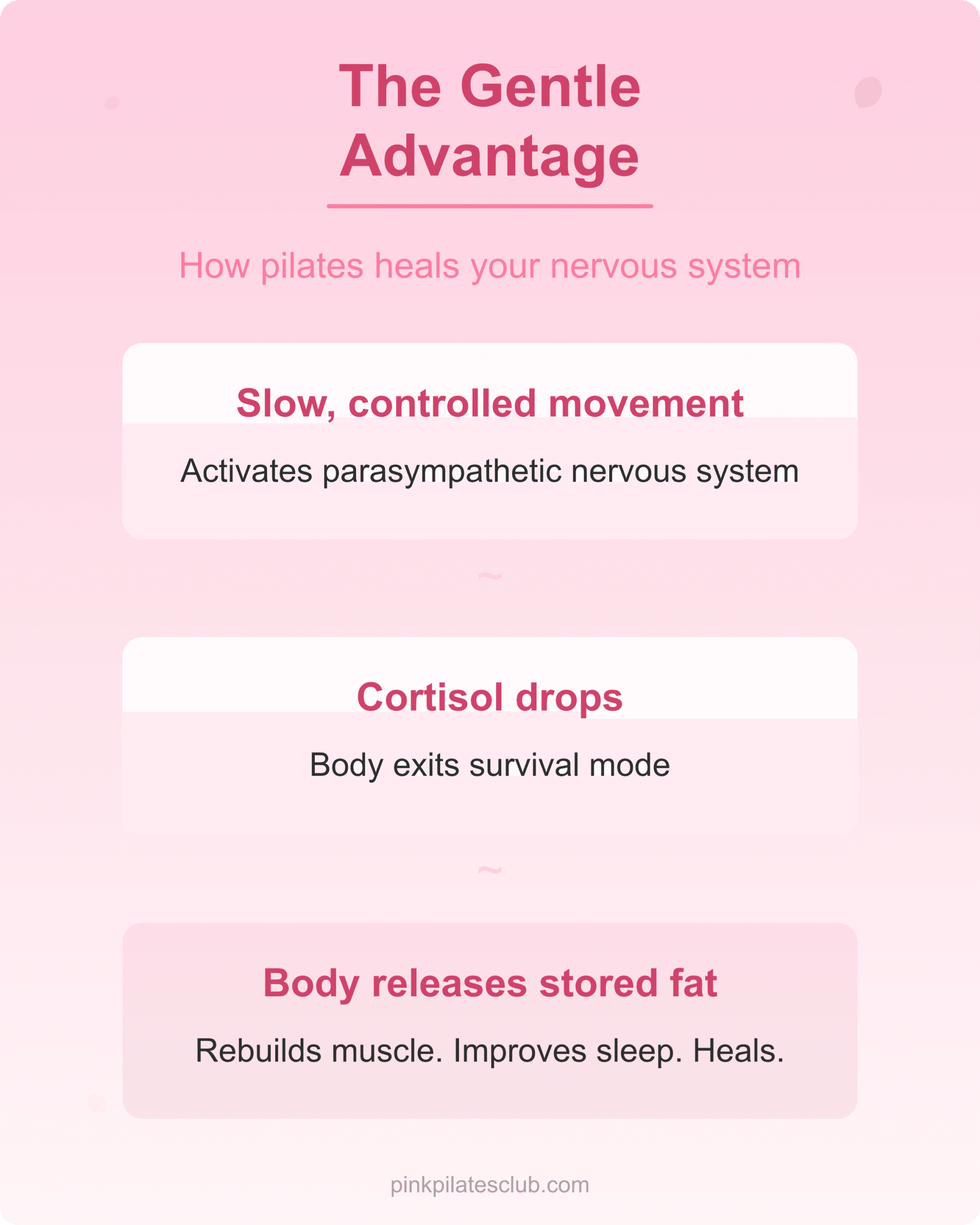
Gentle pilates operates on the opposite end of the stress spectrum. Instead of spiking cortisol, controlled, slow, breath-focused movement activates your parasympathetic nervous system: the “rest and digest” mode that tells your body it is safe.
The Parasympathetic Advantage
When your parasympathetic nervous system is active, cortisol levels drop. Your body shifts from survival mode to recovery mode. It releases stored fat instead of hoarding it. It rebuilds muscle instead of breaking it down. It improves sleep quality, reduces inflammation, and regulates appetite naturally.
A 2021 study in the Frontiers in Psychology journal found that mind-body exercises like pilates significantly reduced cortisol levels in participants experiencing chronic stress. The gentle nature of the practice was not a limitation. It was the mechanism. The softness was what allowed the body to heal.
Why Breath-Focused Movement Changes Everything
Pilates breathing, the lateral thoracic pattern where you inhale to expand your ribcage and exhale to engage your core, directly stimulates the vagus nerve. The vagus nerve is the primary communication line between your brain and your body’s calming systems. When it is activated, heart rate slows, blood pressure drops, and cortisol production decreases.
This means that every single breath you take during a pilates session is actively regulating your nervous system. You are not just exercising. You are healing your stress response from the inside out. This is something HIIT, by design, cannot do. If you want to learn the breathing technique, our guide on why pilates is not working includes a detailed breakdown of the lateral breathing pattern and how to practise it.
Gentle Pilates vs HIIT: The Real Comparison
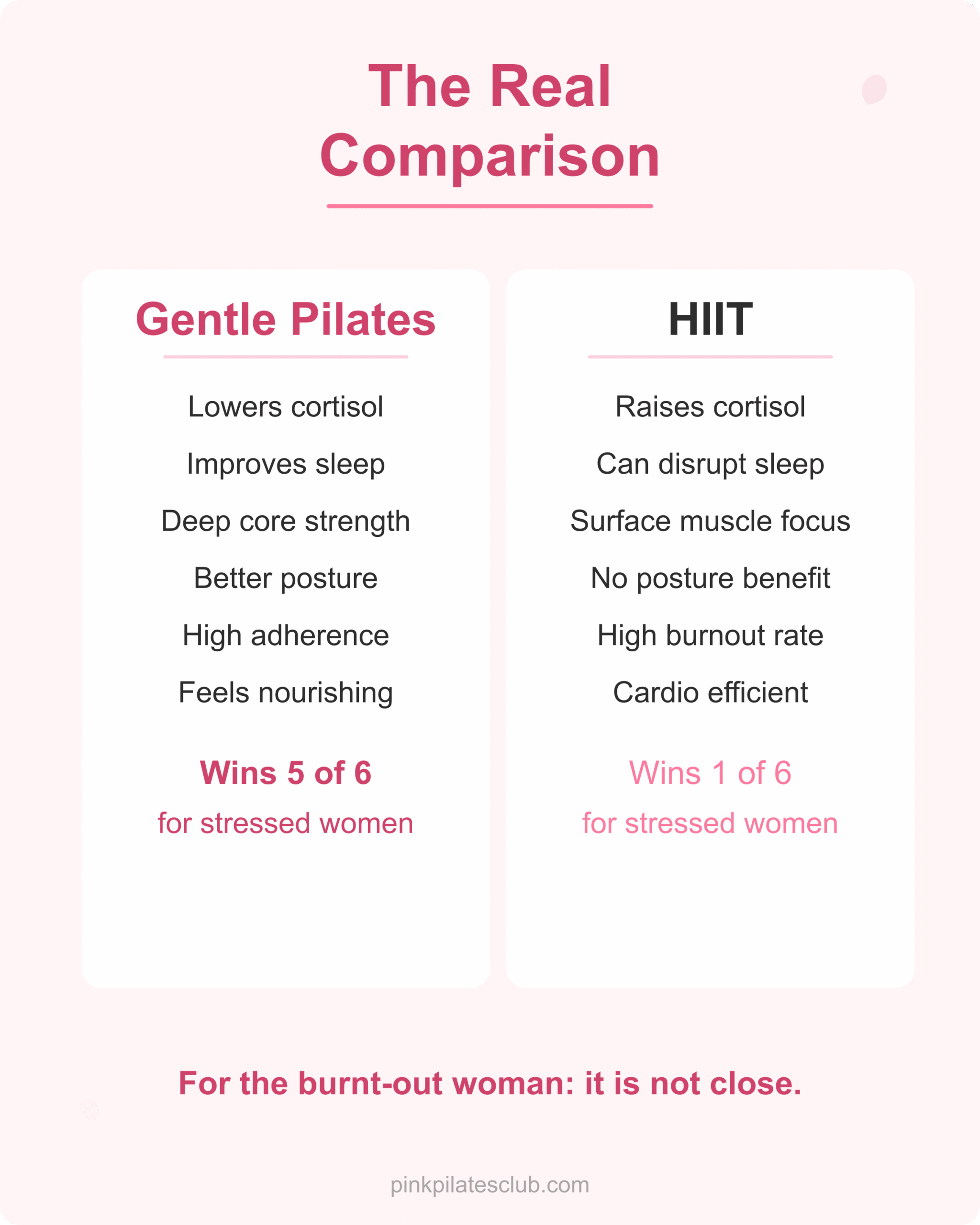
Let us put the two side by side with honesty. HIIT has genuine benefits: cardiovascular fitness, calorie burn, time efficiency. It is not a bad form of exercise. But for the specific population of women who are stressed, burnt out, or struggling with unexplained weight gain, the comparison shifts dramatically.
For Stressed Women: Gentle Pilates Wins
If your cortisol is already elevated, gentle pilates helps lower it while still building strength, improving posture, and toning your body. HIIT, in the same situation, raises cortisol further and can worsen the very symptoms you are trying to fix.
For Recovery and Sleep: Gentle Pilates Wins
Pilates improves sleep quality by activating the parasympathetic nervous system. HIIT performed in the evening can disrupt sleep due to sustained cortisol elevation. Better sleep means better recovery, which means better results from every session.
For Long-Term Consistency: Gentle Pilates Wins
This is the factor most comparisons ignore. A workout you dread is a workout you will eventually quit. Research on exercise adherence consistently shows that enjoyment is the strongest predictor of long-term consistency. Gentle pilates, done in a beautiful space with calming music and a community you love, is something women stick with for years. HIIT burnout rates are significantly higher. Our guide to pilates consistency tips explores this in detail.
For Core Strength and Posture: Gentle Pilates Wins
Pilates was specifically designed to target the deep stabilising muscles of the core, spine, and pelvic floor. These muscles respond to slow, controlled movement, not explosive power. HIIT primarily targets fast-twitch muscle fibres and cardiovascular endurance, which are different systems entirely.
For Cardiovascular Fitness: HIIT Wins
In fairness, if your primary goal is pure cardiovascular conditioning, HIIT is more efficient. But for the Anxious Burnt-Out Girl, cardiovascular fitness is rarely the actual goal. The real goals are usually a flatter stomach, less anxiety, better sleep, and feeling good in her body. Gentle pilates addresses all four.
The “Trade Burnout for Bloom” Philosophy in Practice
This is the core philosophy behind Pink Pilates Club, and it is not just a tagline. It is an evidence-based approach to women’s fitness that acknowledges a reality the fitness industry has ignored for decades: most women are not under-exercised. They are over-stressed.
The Problem Is Not Laziness
When a woman cannot lose belly fat despite consistent exercise, the mainstream fitness response is usually: work harder, eat less, push through. This advice makes the problem worse for stressed women. It adds more cortisol to an already overloaded system.
The “Trade Burnout for Bloom” approach says: do less, but do it with intention. Move gently. Breathe deeply. Create a practice that feels like restoration, not punishment. Let your nervous system come down from its perpetual high alert. And then watch your body respond in ways that aggressive workouts never achieved.
What “Bloom” Looks Like in Real Life
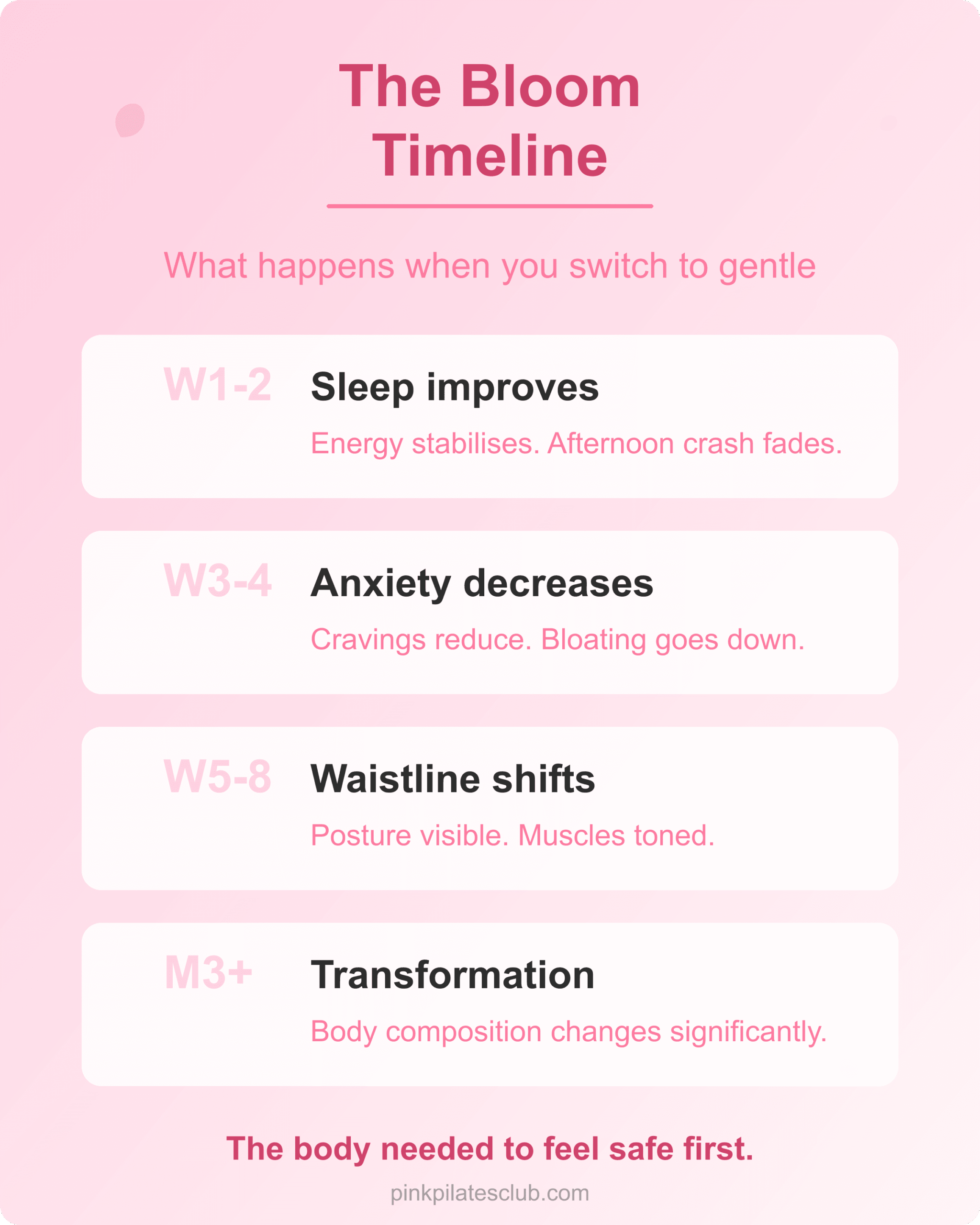
Women who switch from HIIT to gentle pilates often report a specific sequence of changes:
- Week 1 to 2: sleep improves noticeably. Energy levels stabilise. The afternoon crash diminishes
- Week 3 to 4: anxiety decreases. Cravings for sugar and carbs reduce. Bloating goes down
- Week 5 to 8: waistline starts shifting. Posture improves visibly. Muscles feel more toned without feeling bulky
- Month 3 and beyond: body composition changes significantly. The midsection that HIIT could not touch begins to flatten. Energy is stable throughout the day
This timeline is not coincidental. It follows the exact pattern of cortisol regulation and nervous system recovery. The body needed to feel safe before it could change.
Who Should Choose Gentle Pilates Over HIIT
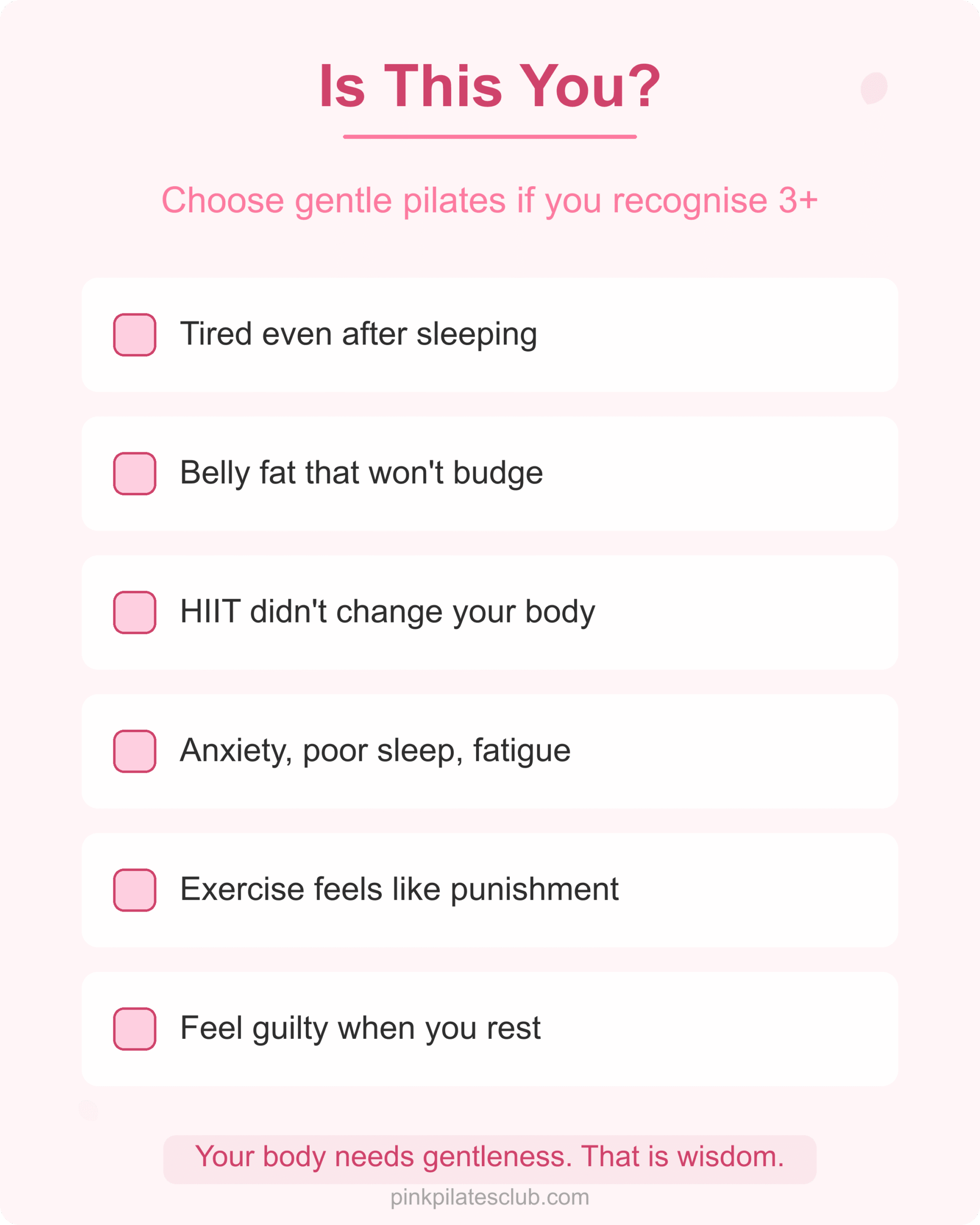
Not every woman needs to abandon HIIT. If you are well-rested, low-stress, and genuinely enjoy high-intensity training, it can be a great part of your fitness routine. But you should seriously consider prioritising gentle pilates if:
- You feel tired even after sleeping. Your body never fully recharges
- You carry stress in your stomach and midsection, and it will not budge regardless of exercise
- You have tried HIIT consistently and your body has not changed, or has gotten worse
- You experience anxiety, sleep issues, or chronic fatigue
- Your relationship with exercise feels punishing rather than nourishing
- You feel guilty when you rest, like you should always be doing more
If you recognised yourself in three or more of those points, your body is telling you something. It does not need more intensity. It needs more gentleness. And that is not weakness. It is wisdom.
How to Start: Making the Switch
If you are coming from a HIIT background, switching to gentle pilates can feel uncomfortable at first. Your brain might tell you that you are not doing enough. That the workout is too easy. That you should be sweating more. This is conditioning, not truth.
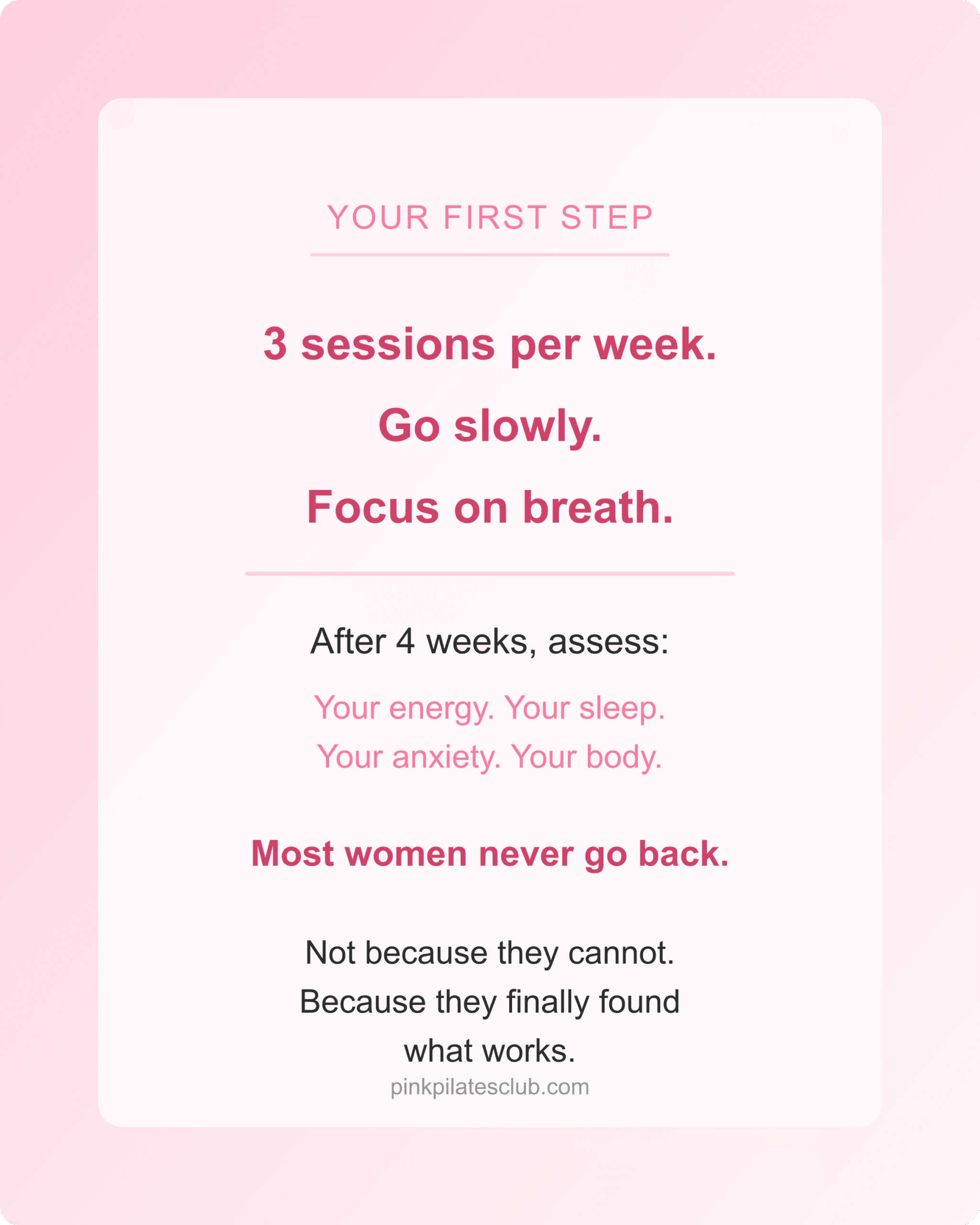
Start with three gentle pilates sessions per week. Give yourself permission to go slowly. Focus on breath, core engagement, and controlled movement. Use our beginner workout guide as your starting framework. It is specifically designed with proper breathing cues, deep core activation prompts, and a pace that supports nervous system regulation.
After four weeks, assess honestly. Not just your body, but your energy, sleep, anxiety, and overall wellbeing. Most women who make this switch never go back. Not because they cannot handle HIIT. But because they finally found something that works with their body instead of against it.
If you want to build the full lifestyle around your practice, our guide to becoming a pink pilates princess on a budget shows you how to create a beautiful, sustainable practice without spending a fortune. And our morning routine guide helps you anchor pilates into your daily rhythm so it becomes automatic.
Frequently Asked Questions
Is gentle pilates enough exercise to lose weight?
For many women, especially those with elevated cortisol, gentle pilates is more effective for fat loss than intense exercise. By lowering cortisol and activating the parasympathetic nervous system, it allows your body to release stored fat instead of hoarding it.
Can I do both HIIT and pilates?
Yes, but be intentional. If you are chronically stressed, start with pilates only for at least eight weeks. Once your nervous system is regulated and your sleep is solid, you can add one to two HIIT sessions per week alongside your pilates practice.
Why does my stomach get bigger with HIIT?
Chronic high-intensity training in a stressed body elevates cortisol, which triggers abdominal fat storage. Your body interprets the intense exercise as another threat and responds by holding onto midsection fat as an emergency energy reserve.
How long before gentle pilates shows results?
Sleep and energy improvements appear within one to two weeks. Visible body composition changes typically begin between weeks four and eight. Significant transformation happens at month three with consistent practice three to five times per week.
Is the “gentle pilates vs HIIT” debate settled by science?
The science is clear that for chronically stressed women, gentle exercise produces better outcomes than high-intensity training. This is due to cortisol regulation, not exercise intensity. For low-stress individuals, both forms of exercise are effective.
Your Next Step
The gentle pilates vs HIIT question is not really about which workout burns more calories in 30 minutes. It is about which approach your body can actually respond to right now. If you have been pushing harder and getting nowhere, this is your permission to stop.
Trade burnout for bloom. Choose gentle. Choose consistent. Choose a practice that makes your nervous system feel safe enough to let go of what it has been holding onto. That is not giving up. That is the smartest fitness decision you will ever make.
Ready to begin? Start with our beginner pink pilates princess workout. Fifteen minutes of gentle, effective movement designed for women who are done with burnout and ready to bloom.
You do not need to push harder. You need to move softer.