You have been scrolling through reformer pilates before and after photos, and they are making you feel two things at once. Inspired, because the transformations look incredible. And sceptical, because nobody is telling you how long those changes actually took, how many sessions per week were involved, or what else changed alongside the pilates.
This guide gives you what those transformation posts leave out: a realistic, week-by-week breakdown of what reformer pilates actually does to your body from day one to week twelve. No exaggeration, no fake timelines, no “I got abs in two weeks” fiction. Just honest expectations backed by exercise science and the real experiences of women who stuck with it.
Because here is the truth that will save you from quitting too early: the changes are real, they are significant, and they are coming. You just need to know when to expect what.
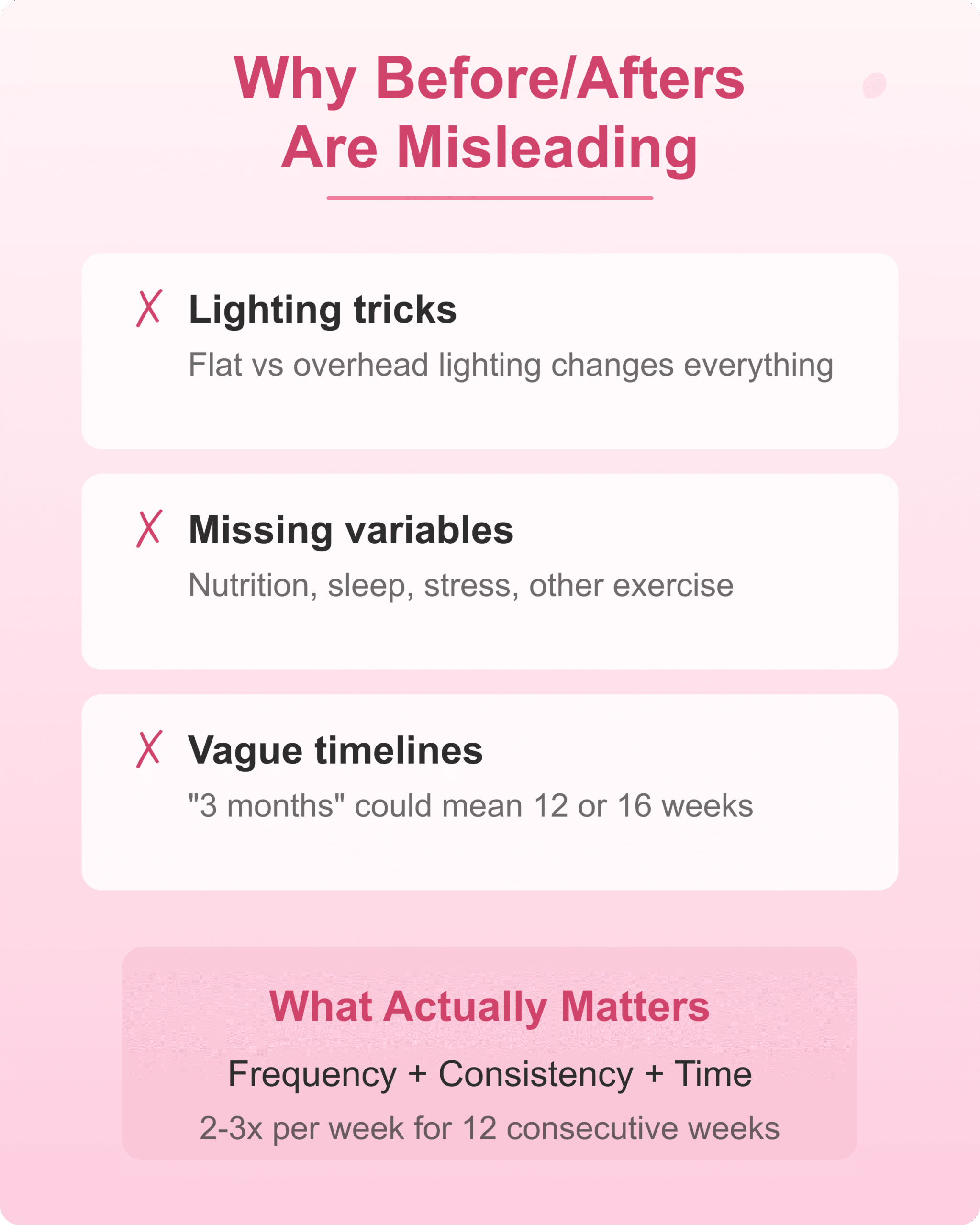
Why Most “Before and After” Posts Are Misleading
Before we get into the timeline, let us address why the transformation content you see online creates unrealistic expectations.
The Lighting and Posture Problem
A “before” photo taken in flat lighting with relaxed posture and a “after” photo taken with overhead lighting, an engaged core, and a slight twist can make a dramatic difference without a single physical change happening. This is not dishonesty. It is just how photography works. But it creates the illusion that results happened faster or more dramatically than they did.
The Missing Variables
Most before-and-after posts do not mention:
- How many times per week the person trained
- Whether nutrition changed alongside the pilates
- How long the transformation actually took (“3 months” could mean 12 weeks or 16)
- Whether other forms of exercise were involved
- Whether hormone, stress, or sleep changes contributed
This matters because if you expect reformer-only results in 4 weeks based on someone who combined reformer with walking, nutrition changes, and stress management over 12 weeks, you will feel like pilates “is not working.” If that feeling sounds familiar, our article on why pilates is not working breaks down the real reasons progress stalls.
The Honest Baseline
Reformer pilates absolutely changes your body. The research is clear. But the timeline depends on three factors:
- Frequency: Two to three sessions per week produces meaningful results. One session per week maintains but rarely transforms.
- Consistency: Twelve consecutive weeks of regular practice produces more change than twenty sporadic sessions spread over six months.
- Starting point: Someone who has never exercised will see faster initial changes than someone who is already active, because the body is adapting to a new stimulus.
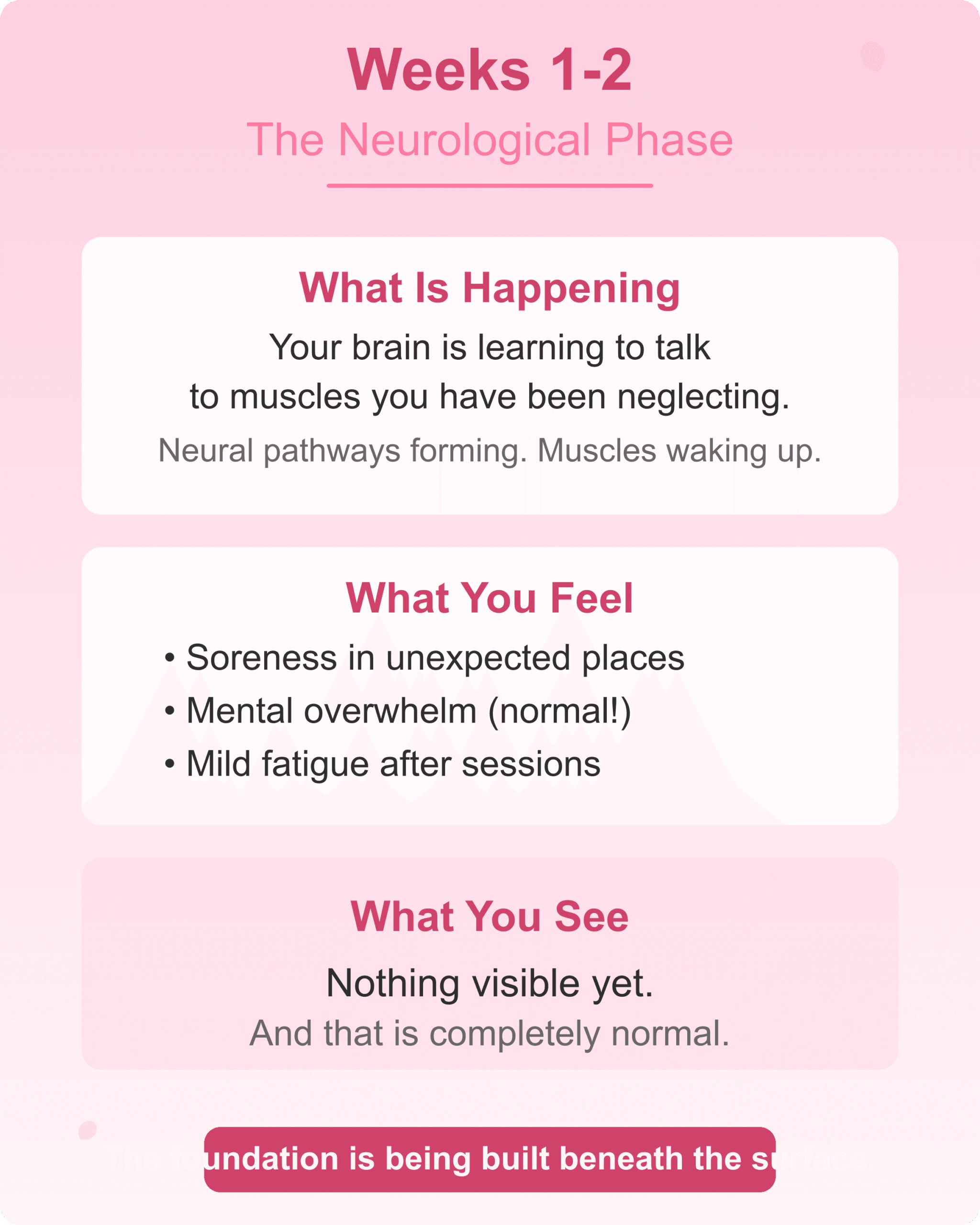
Weeks 1-2: The Neurological Phase
The first two weeks are not about muscle growth. They are about your brain learning to talk to your muscles.
What Is Happening Inside
Your nervous system is building new neural pathways to muscles you have probably been neglecting for years. The deep transverse abdominis, the pelvic floor, the small stabilisers around your spine and hips are “waking up.” This is called neuromuscular adaptation, and it is the essential first step before any visible change happens.
What You Will Feel
- Muscle soreness in unexpected places: Inner thighs, deep core, the area between your shoulder blades. The reformer finds muscles that other workouts miss.
- Mild fatigue after sessions: Your nervous system is working hard. You may feel more tired than the workout seems to justify.
- Mental overwhelm: Learning the machine, the springs, the terminology. This is normal and temporary.
What You Will See
Nothing visible yet. And that is completely normal. Anyone who tells you they saw dramatic physical changes in two weeks of pilates is either experiencing reduced bloating (which is real but temporary) or seeing what they want to see.
What to Do
Show up. Learn. Be patient. The foundation you are building right now is what makes weeks 4 through 12 possible. If the machine still feels confusing, our reformer pilates beginner guide covers everything from springs to etiquette.
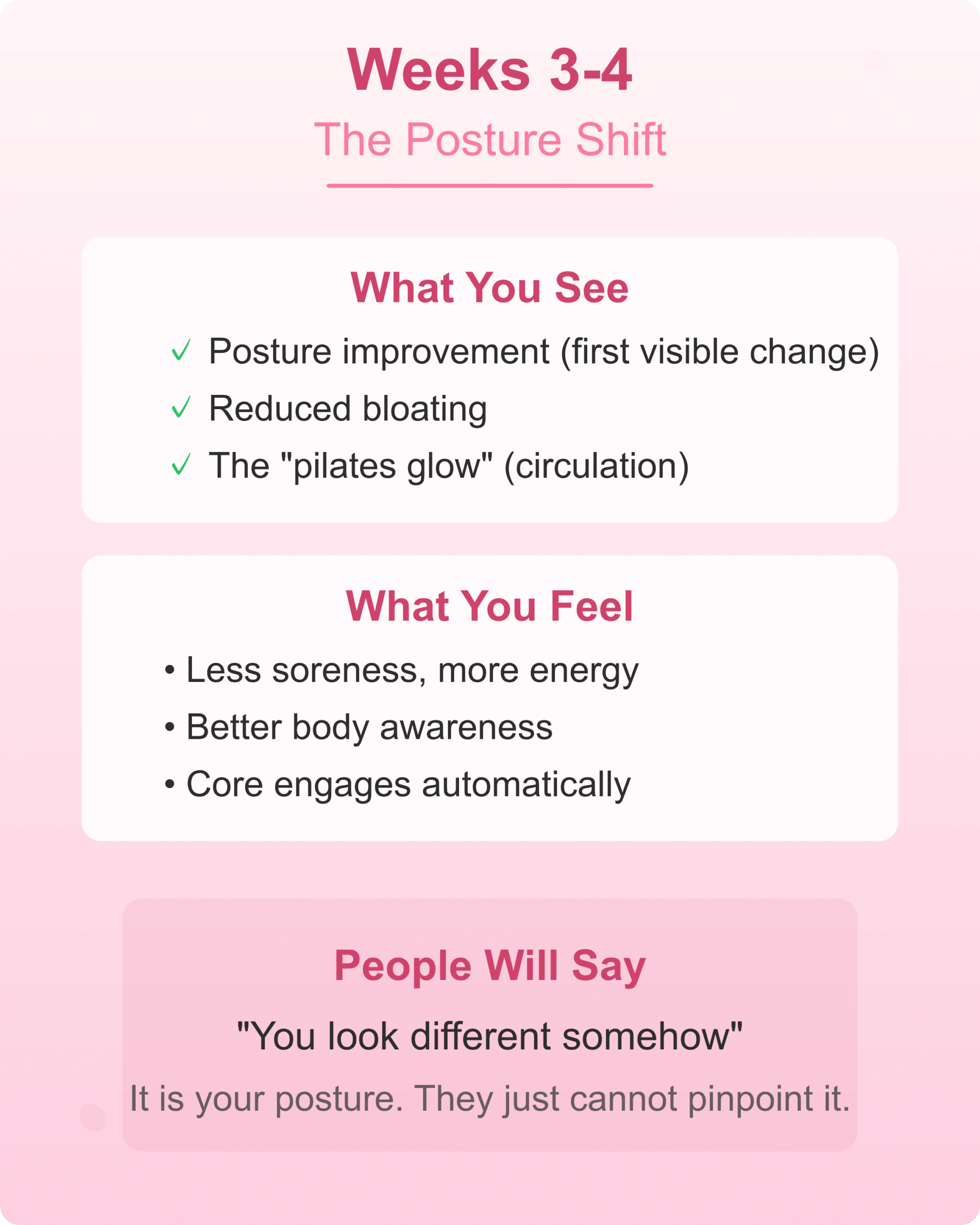
Weeks 3-4: The Posture Shift
This is when the first real changes start to appear, but they are not the ones you expect.
What Is Happening Inside
Your deep core muscles are now engaging more efficiently. The neural pathways built in weeks 1-2 are becoming automatic. Your body is starting to recruit the right muscles for each exercise without you having to think about it. Muscle endurance is increasing, meaning you can hold positions longer and do more reps before fatigue.
What You Will Feel
- Less soreness: Your body has adapted to the stimulus. Sessions feel challenging but not punishing.
- Better body awareness: You start to feel whether your form is correct without the instructor telling you. You can sense when your core is engaged versus when it is not.
- More energy: The initial fatigue lifts. Many women report feeling energised after sessions rather than drained.
What You Will See
- Posture improvement: This is the first visible change most women notice. Your shoulders sit back and down naturally. You stand taller without thinking about it. People may comment that you “look different” without being able to pinpoint why.
- Reduced bloating: Core engagement and improved breathing patterns often reduce abdominal bloating. Your waistline may look slightly slimmer, not from fat loss but from better muscle tone and reduced puffiness.
- The “pilates glow”: Improved circulation and deep breathing give your skin a subtle glow. This is not marketing. Better blood flow genuinely improves skin quality.
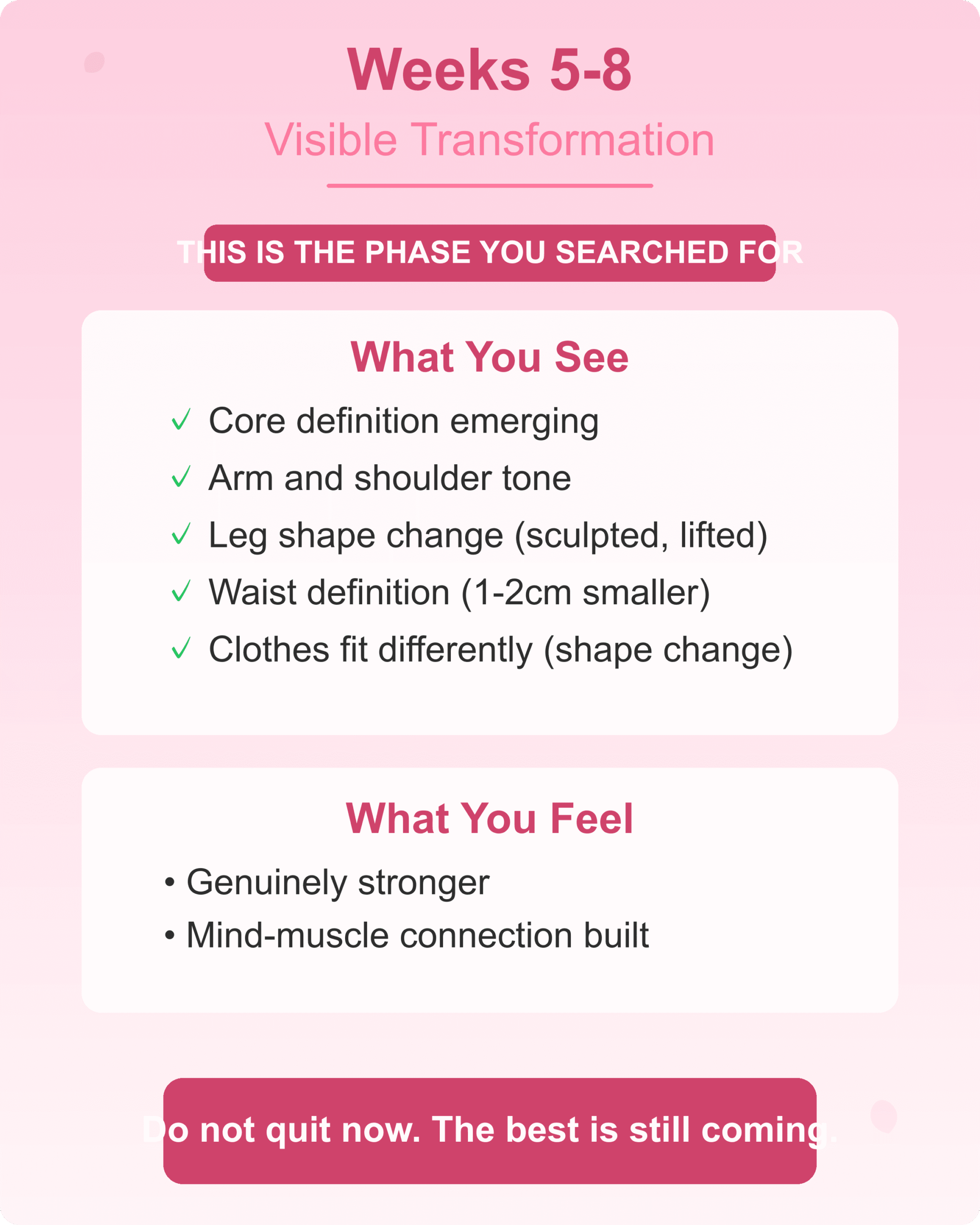
Weeks 5-8: The Visible Transformation Begins
This is the phase most people are looking for when they search reformer pilates before and after. Weeks 5 through 8 are where the visible body changes start to become undeniable.
What Is Happening Inside
Actual muscle hypertrophy (growth) is beginning. Your muscles are getting denser and more defined. The type of muscle pilates builds is long, lean, and functional, not bulky. Your metabolic rate is increasing slightly because muscle tissue burns more calories at rest than fat tissue. Flexibility is improving significantly as the springs assist deeper stretches.
What You Will Feel
- Genuinely stronger: Exercises that challenged you in week 2 are now your warm-up. You are adding springs, increasing reps, and attempting exercises you would not have tried a month ago.
- Mind-muscle connection: You can isolate and engage specific muscles on command. This is a skill, and you have built it.
- Clothes fitting differently: Not necessarily a size change, but a shape change. Jeans fit better through the waist. Tops sit differently across the shoulders.
What You Will See
- Core definition: The beginnings of visible ab tone, especially in the obliques and the line running down the centre of your abdomen (linea alba). This is most noticeable in the morning before eating.
- Arm and shoulder tone: The strap work on the reformer produces visible toning in the triceps, shoulders, and upper back. This is one area where reformer results often surpass mat pilates results.
- Leg shape change: The footwork and leg spring exercises sculpt the inner thighs, quads, and glutes. The change is subtle but real, a more sculpted, lifted shape rather than bulk.
- Waist definition: A combination of core toning, reduced bloating, and improved posture creates a visibly smaller waist measurement for many women. Studies show an average reduction of 1 to 2cm in waist circumference after 8 weeks of consistent pilates.
This phase is also where many women quit because progress feels “slow.” It is not slow. It is sustainable. Our pilates consistency guide has strategies for pushing through the mid-programme plateau.
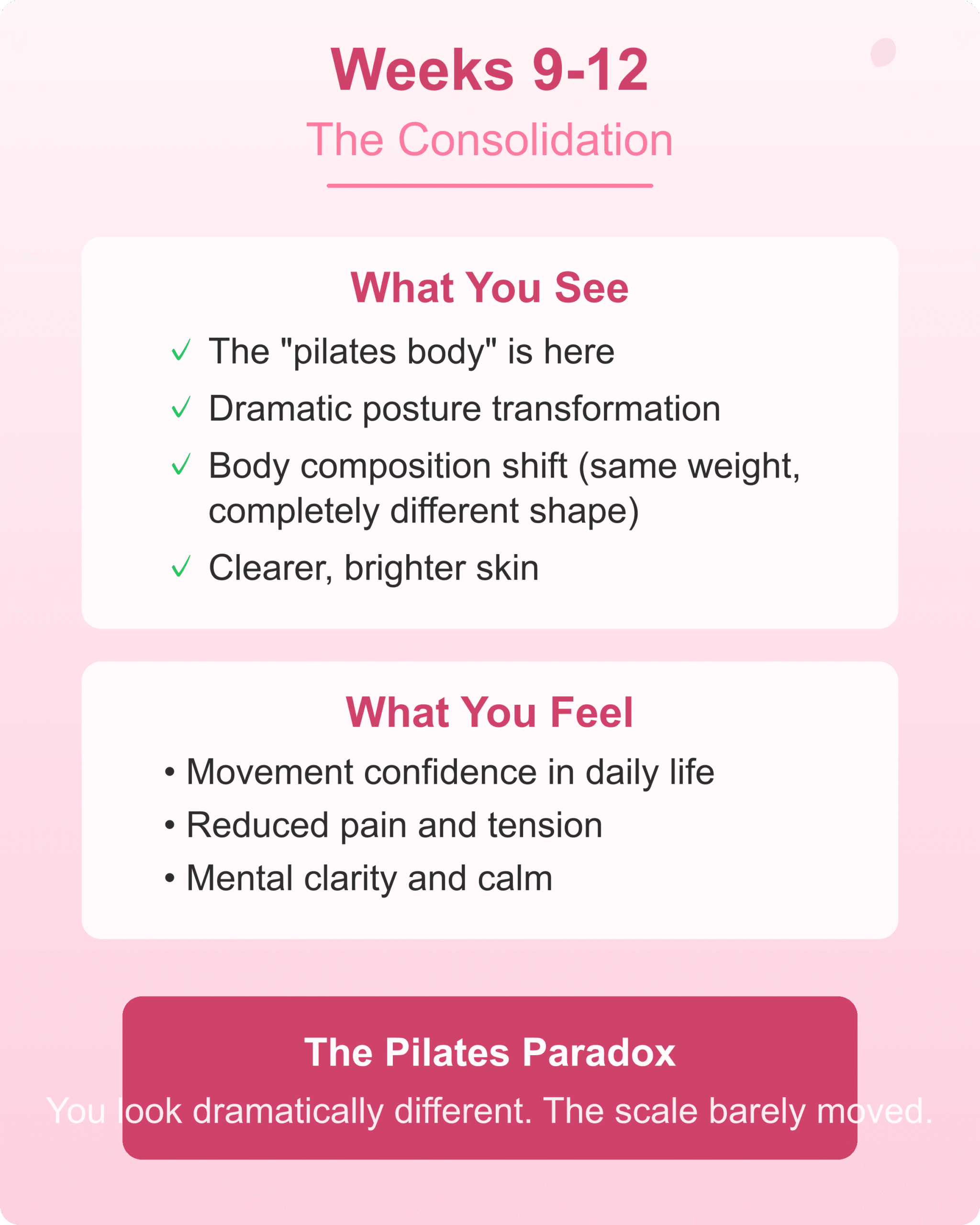
Weeks 9-12: The Consolidation Phase
By week 9, you are no longer a beginner. You are a practitioner. The changes from here are about deepening what you have built and making it permanent.
What Is Happening Inside
Muscle memory is solidifying. Your body now moves with pilates-informed posture and alignment throughout your day, not just during class. Your deep stabilising muscles fire automatically when you bend, lift, sit, or stand. Your resting metabolic rate has increased measurably due to the lean muscle you have added.
What You Will Feel
- Movement confidence: You move through daily life with more grace and awareness. Picking up groceries, climbing stairs, sitting at your desk: everything feels different.
- Reduced pain: If you came to pilates with back pain, hip tightness, or shoulder tension, you are likely experiencing significant relief by now. Our pilates for lower back pain guide explains the mechanics behind this relief.
- Mental clarity: The combination of controlled breathing, focused movement, and regular practice has a measurable impact on anxiety and stress levels. Pilates is not just a physical practice.
What You Will See
- The “pilates body”: Long, lean muscles visible through your arms, legs, and torso. Defined without being bulky. Strong without being rigid.
- Significant posture transformation: Compare a photo from week 1 to now. The difference in how you carry yourself is striking.
- Body composition change: Even if the scale has not moved dramatically, your body fat percentage has likely decreased and your lean muscle mass has increased. This is the classic pilates paradox: you look dramatically different while weighing roughly the same.
- Facial and skin changes: Improved circulation, better sleep, and reduced stress hormones contribute to clearer, brighter skin. Multiple women report being asked what skincare product they changed, when the real answer is pilates.
Beyond Week 12: What Long-Term Practice Looks Like
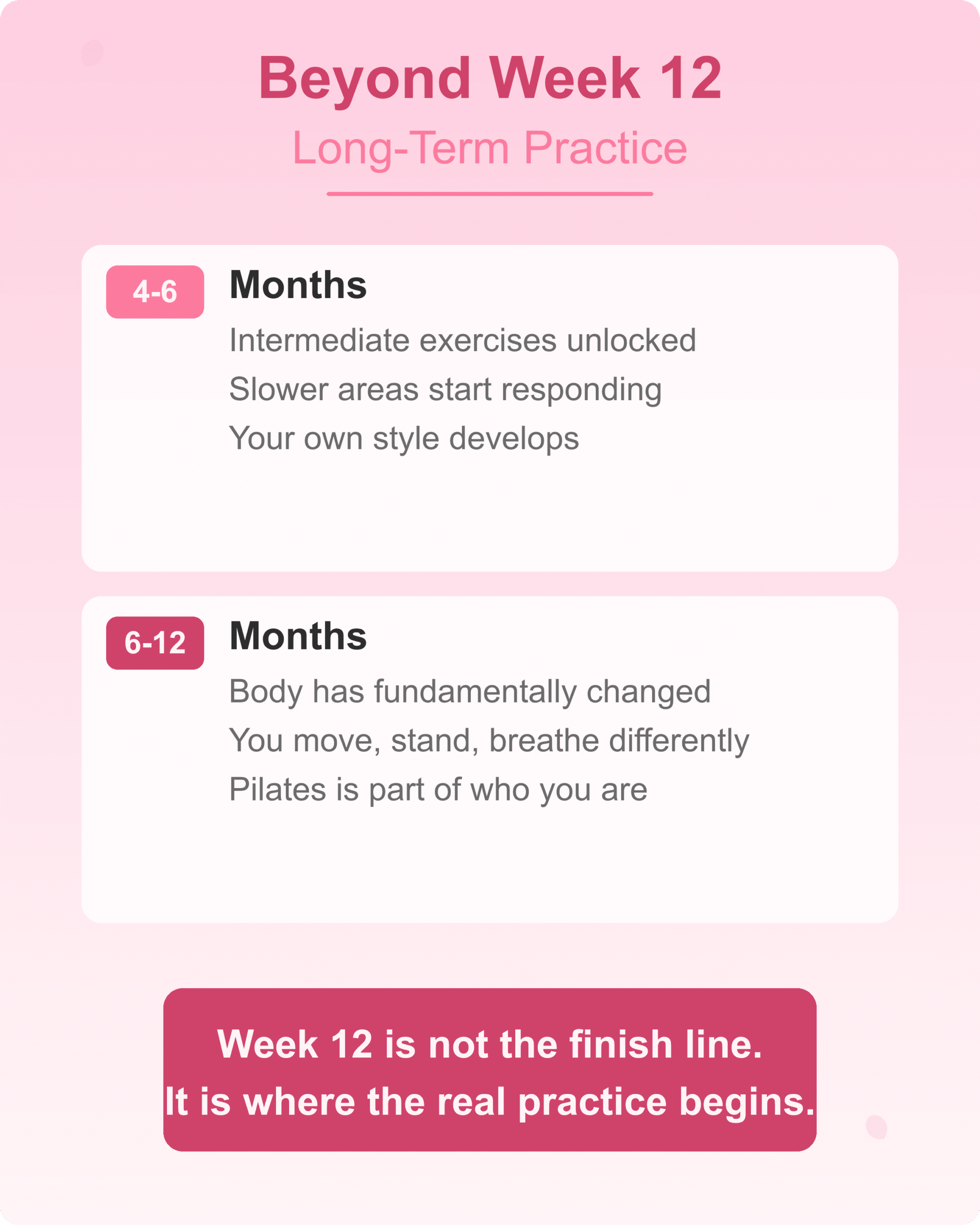
Week 12 is not the finish line. It is the point where reformer pilates stops being something you do and becomes part of who you are.
Months 4-6
You are ready for intermediate and advanced exercises. Your spring preferences are established. You start to develop your own practice style. The body changes from months 1 to 3 continue to deepen, and you start to notice changes in areas that were slower to respond (lower belly, inner thighs, upper arms).
Months 6-12
The transformations that people post online as “6-month reformer results” are real at this point. Your body has fundamentally changed in shape, posture, and capability. You move differently. You stand differently. You breathe differently. And you have proven to yourself that gentle, consistent movement delivers results that aggressive workouts never could.
For the science behind why gentle movement outperforms intense exercise for lasting body change, our gentle pilates vs HIIT guide has the research.
Factors That Speed Up (or Slow Down) Your Results
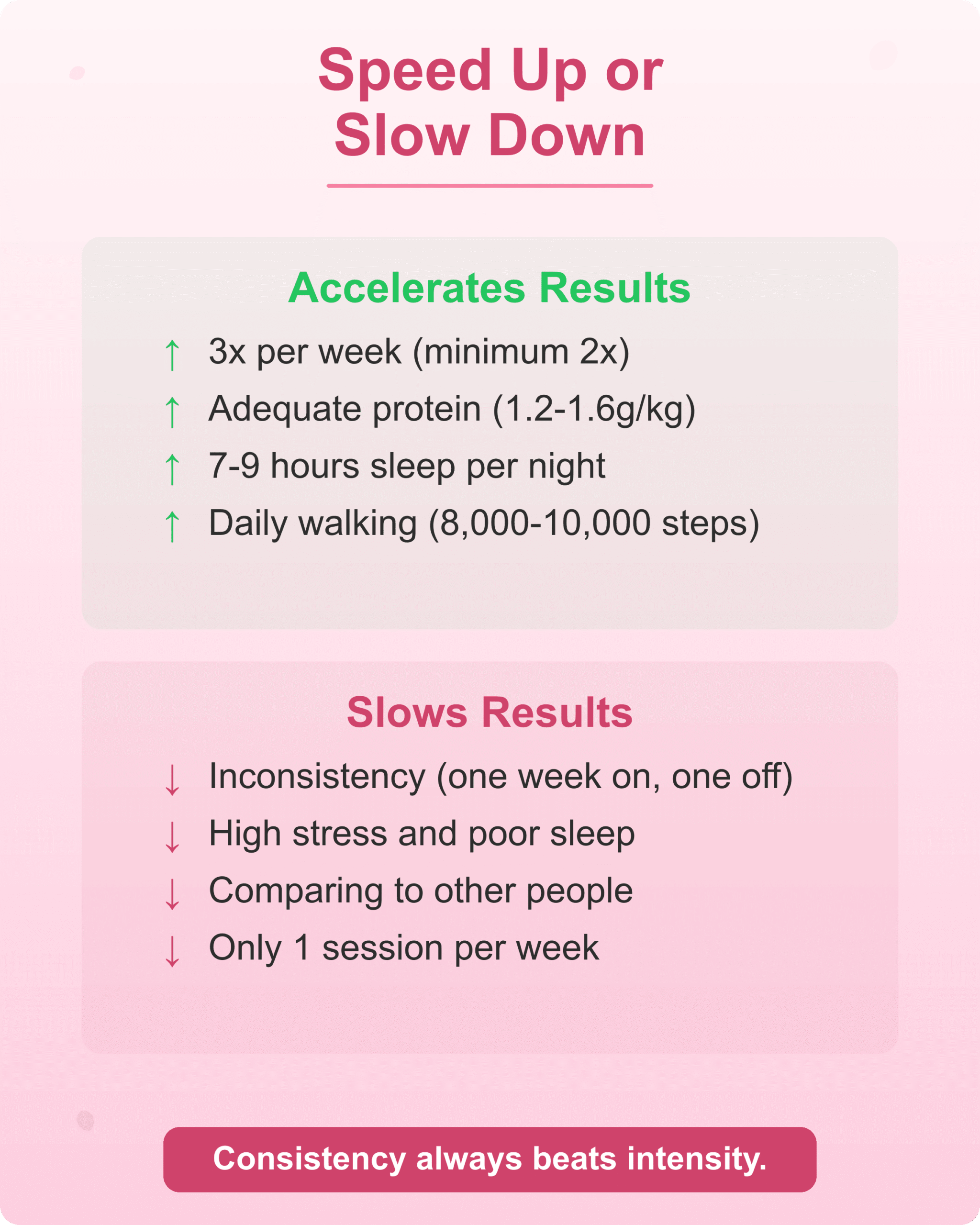
Your timeline is not fixed. These variables determine whether you are on the faster or slower end of the spectrum.
Factors That Accelerate Results
- Frequency: Three sessions per week consistently beats two sessions. Four accelerates further.
- Nutrition: Adequate protein (1.2 to 1.6g per kg of body weight) supports muscle building. Hydration reduces bloating. A balanced diet supports recovery.
- Sleep: Seven to nine hours per night. Muscle repair and growth hormone release happen during deep sleep. Cutting sleep cuts results.
- Complementary movement: Adding daily walking (8,000 to 10,000 steps) alongside reformer sessions supports fat loss and cardiovascular health without competing with your pilates recovery.
Factors That Slow Results
- Inconsistency: Sporadic attendance (one week on, one week off) prevents the cumulative adaptation that produces visible change.
- High stress and poor sleep: Elevated cortisol blocks muscle building and promotes fat storage, particularly around the midsection. This is a real physiological barrier, not a lack of effort.
- Comparing to others: Every body responds differently based on genetics, hormonal profile, starting fitness level, and age. Your timeline is your own.
- Only doing one class per week: One session per week maintains fitness but rarely produces visible transformation. Two to three is the minimum for measurable change.
What Reformer Pilates Cannot Do (Honest Limitations)
Setting honest expectations protects you from disappointment and keeps you focused on what pilates actually excels at.
Pilates Alone Is Not a Weight Loss Programme
Reformer pilates burns roughly 250 to 400 calories per session. That is meaningful, but it is not enough for significant weight loss without dietary changes. Pilates transforms your body composition (more muscle, less fat) and shape, but if the scale is your primary metric, you need nutrition alongside your practice.
Pilates Does Not Spot-Reduce Fat
No exercise can target fat in specific areas. Pilates will strengthen and tone the muscles under the fat, which changes how that area looks, but it does not selectively burn fat from your belly, arms, or thighs. Overall fat reduction comes from a caloric deficit, not from doing more core exercises.
Results Require Consistency, Not Intensity
Adding a fourth or fifth weekly session will accelerate results slightly. But doing one intense session per month will not. Gentle consistency always beats sporadic intensity. That is the core philosophy of Pink Pilates Club: trade burnout for bloom.
Frequently Asked Questions
How long does it take to see results from reformer pilates?
Most women notice posture improvements and reduced bloating within 3 to 4 weeks of consistent practice (two to three sessions per week). Visible muscle tone typically appears between weeks 6 and 8. Significant body composition changes happen around weeks 10 to 12.
Will reformer pilates change my body shape?
Yes. Reformer pilates builds long, lean muscle and improves posture, which creates a taller, more sculpted appearance. It defines the waist, tones the arms and legs, and lifts the glutes. The change is a reshaping rather than a size change, which is why the mirror tells a different story than the scale.
How many times a week do I need to do reformer pilates to see results?
Two to three sessions per week is the minimum for visible transformation. Three sessions produces noticeably faster results than two. One session per week maintains fitness but rarely produces visible body changes on its own.
Why am I not seeing results after a month of reformer pilates?
One month (4 weeks) is typically too early for dramatic visible results. The first month is primarily neurological adaptation, meaning your body is learning the movements. Visible changes start around weeks 5 to 8. If you are past that point, inconsistency, sleep quality, stress levels, or nutrition may be the limiting factors.
Is reformer pilates better than mat pilates for body transformation?
The reformer offers more variety and upper body options, which can produce faster visible toning in the arms and shoulders. Mat pilates builds deeper core stability. For overall body transformation, both are equally effective. Our reformer vs mat pilates comparison has the detailed breakdown.
Your Next Step
The reformer pilates before and after transformation you want is real. It just does not happen in the timeline that social media suggests. It happens across 12 weeks of consistent, gentle, intentional practice. Week by week, your body adapts, strengthens, and reshapes itself in ways that last far longer than any crash diet or intense workout programme ever could.
If you are in weeks 1 to 4 and feel like nothing is happening: it is. The foundation is being built beneath the surface. If you are in weeks 5 to 8 and starting to see changes: keep going. The best results are still ahead. If you are past week 12: you have built something permanent.
Want a structured programme to guide your reformer journey? The That Girl Reformer Pilates Series gives you progressive workouts designed for exactly the 12-week timeline we have outlined here. Or if consistency is your challenge, the Pilates Consistency Cheat Code helps you build the habit that makes transformation possible.
You do not need a dramatic before-and-after photo. You just need to keep showing up, and let your body bloom at its own pace.